
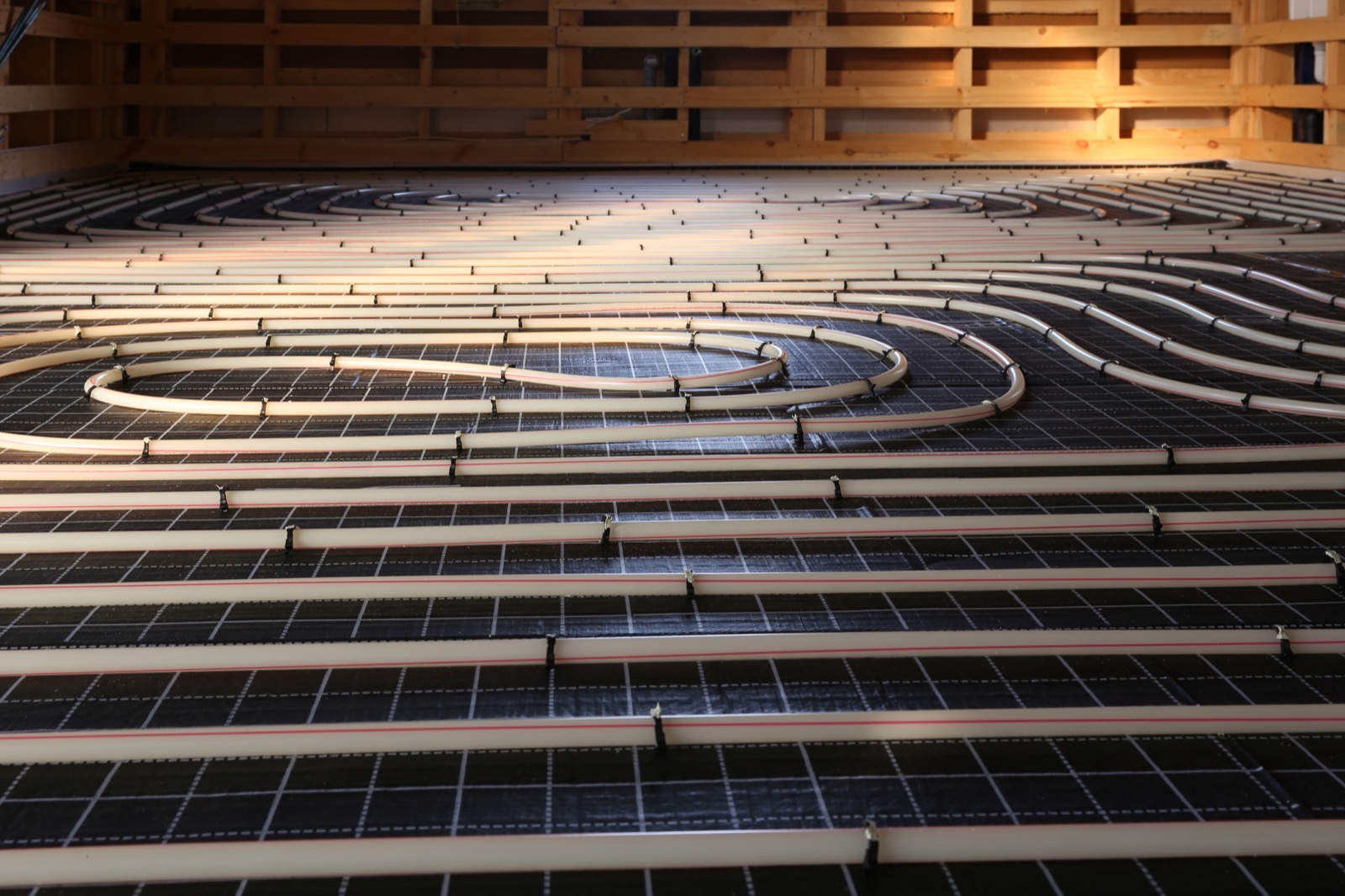
Can You Put Hardwood Over Radiant Heat?
Yes. But radiant heat changes the hardwood equation, and it demands tighter control than a standard install.
Radiant heat dries the wood. When you run heat through a slab or under a subfloor, you lower the relative humidity at the floor surface and accelerate moisture loss from the boards. The wood shrinks more than it would in a cold environment. Shrinkage creates gaps and stress cracks. That's the core problem, and it's why radiant systems need special planning.
Which products work over radiant
Engineered hardwood is often the best choice. The cross-ply construction resists the shrinkage that comes with heat-driven drying. Engineered products are designed to handle moisture and temperature swings, so they're built for the stress that radiant systems create.
Some solid hardwoods are allowed over radiant, but only if the manufacturer explicitly approves it. Species, width, and thickness matter. Check the product specifications and warranty terms. A narrow solid plank (2.25 inches wide) might be approved while a wide plank (5 inches or wider) is not. The wider the board, the more it moves across the grain, and radiant heat accelerates that movement.
Your installer should verify compatibility in writing before ordering material. Using an unapproved product voids the warranty and leaves you liable if the floor fails.
Pre-install system check
Before any hardwood arrives, the radiant system itself must be commissioned. It needs to be leak-free and fully functional. A heating system that works inconsistently will stress the wood unpredictably.
Test the subfloor moisture while the system is off. It should read between 6% and 9% moisture content. Record that baseline.
Confirm that the system has thermostats or sensors that prevent overheating. Radiant systems are typically designed to keep the floor between 80 and 85 degrees Fahrenheit. Above 85 degrees, the risk of cupping, checking, and gapping accelerates. Check your system's maximum temperature setting and make sure it's within safe limits.
Inspect the system for leaks, cracks, or damage that could trap water under the hardwood. A slow leak in a radiant slab will push moisture up into the wood and cause cupping, regardless of how perfect your hardwood is.
Acclimation and climate targets
The home must be conditioned to normal living temperature and humidity before installation. That means the HVAC system runs at typical winter and summer settings, and the indoor humidity is stable and documented. If your home sits empty and unheated before installation, the wood won't acclimate to the conditions it will experience.
Document the ambient relative humidity in the room. Most hardwood performs best when indoor RH stays between 35% and 50%. Radiant systems in winter can dry the air to 25% or lower, creating a moisture gradient that stresses the wood. If your climate is dry, you may need a humidifier running during heating season.
Take moisture meter readings in the subfloor and in wood boards in multiple locations. Compare the numbers. If the subfloor reads 8% but the wood will experience 25% RH in the room, the floor will lose moisture and shrink during the heating season.
Installation method matters
Glue-down is common over radiant because it doesn't require fastening through a heated surface. But the adhesive choice and trowel pattern affect both bond strength and heat transfer. Some adhesives cure slowly in cold conditions. If you install in winter with the heat off, the glue may not set properly.
Floating installations work, but the underlayment choice becomes critical. Some underlayments insulate against the radiant heat, reducing performance. Others allow heat transfer while cushioning the boards. Your installer needs to choose one approved for radiant applications.
Nail-down over radiant is less common because fasteners can be affected by movement and heat. It's possible, but coordination with the radiant system design is essential.
Leave full expansion gaps at perimeter walls. Typically 1/2 inch to 3/4 inch. Tight seams on radiant systems are a recipe for stress cracks. The wood is already shrinking from heat and low humidity. If it can't expand into the perimeter gap, it will buckle or check.
Post-install heat ramp and maintenance
After installation is complete, ramp the temperature up slowly over 5 to 7 days. Start with the system off and the home at room temperature. Day one, run the system at 60 degrees. Day two, 65 degrees. Keep increasing gradually until you reach your target temperature. Sudden temperature swings shock the wood and cause checking and gapping.
Once you're at target temperature, keep the indoor humidity between 35% and 50% through the heating season. If winter dries your home below 30%, run a humidifier. If it climbs above 50%, reduce moisture sources or run a dehumidifier.
Watch for new gaps opening in the first month after installation and the first heating season. Small gaps are normal. Gaps wider than 1/4 inch, edge checking (cracking on board edges), or popping noises are warnings that something is wrong. If you see any of these, reduce heat swings immediately and call your installer.
What we confirm before you install over radiant
We verify that the radiant system is commissioned and functioning properly. We test subfloor moisture and ambient humidity. We confirm product compatibility in writing and document baseline readings. We specify acclimation conditions and calculate whether the home's winter humidity will be safe for the wood.
We detail the installation method, underlayment, and adhesive for the specific radiant system and product. We provide a written heat-up schedule that you'll follow after installation. We explain how to maintain indoor humidity through Oregon winters and what warning signs to watch for.
Radiant heat doesn't automatically ruin hardwood. It just requires discipline and planning. If you're installing hardwood over radiant in the Roseburg area, we can run the system check, create an installation plan, and manage the heat-up schedule so your floor stays flat and beautiful. Give us a call.
Ready to transform your floors? Back to the Wood Floors has been serving Douglas County since 1990.
Get a Free Quote See Our Work