
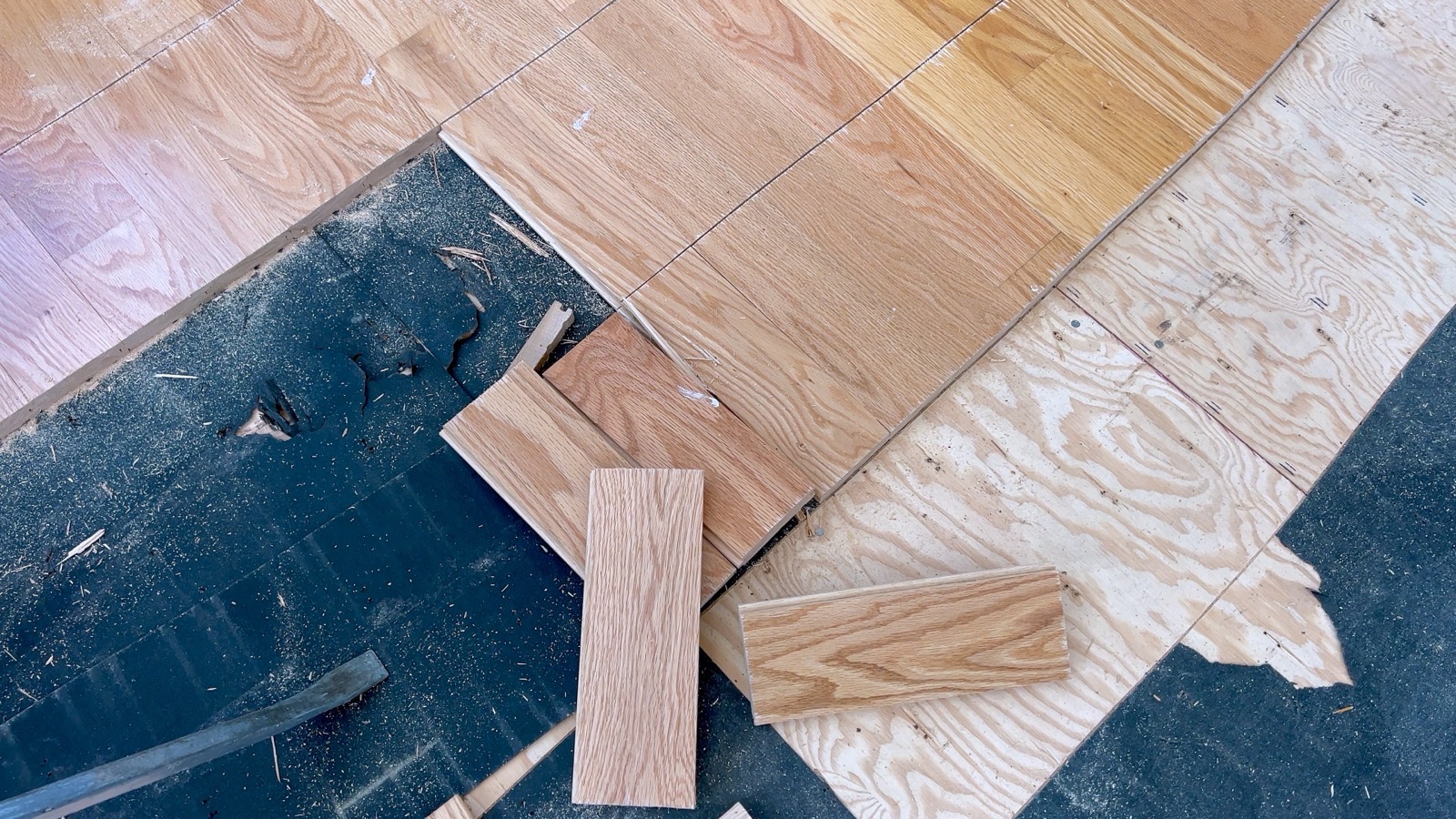
Do You Need a Moisture Barrier Under Hardwood?
The answer depends on your subfloor. There's no universal "moisture barrier" that works everywhere. The right choice for concrete is wrong for plywood. A product that works for a nail-down installation fails for glue-down. The barrier placement and type are determined by what's underneath the hardwood and what kind of installation is planned.
In Douglas County homes, moisture often comes from below: wet crawlspaces, concrete slabs releasing vapor, or seasonal groundwater. The full floor assembly needs to manage moisture, not just add a plastic sheet and hope.
Understanding the barrier names
Homeowners use "moisture barrier" as one term, but the products are different. A vapor retarder is a thin membrane that slows moisture movement. An underlayment is a cushioning layer that may include moisture resistance. A true moisture mitigation system is engineered for high-moisture conditions and includes sealing seams and edges.
Vapor retarders are usually polyethylene sheeting or felt-backed products rated for basic moisture control. They're useful as a layer in the system but are not a complete solution on their own.
Underlayments serve multiple jobs: they cushion the floor, reduce noise, and some products provide moisture resistance. Underlayment choice depends on whether you're nailing down hardwood, gluing it, or floating it. Attached underlayments change the system; separate underlayments (unattached to the hardwood) change it differently.
Moisture mitigation systems are heavy-duty products designed for slabs or very wet subfloors. These include epoxy-based sealers, polyethylene sheeting with taped seams, and specialty underlayments with sealed edges. They're more expensive than basic retarders but are necessary in high-moisture situations.
Where the barrier goes depends on your subfloor
Over a concrete slab, the vapor control layer typically goes directly on the slab before the hardwood system. The goal is to intercept moisture vapor coming from below. Depending on the measured in-slab RH, this can be a basic polyethylene sheet or a full mitigation system with sealing and overlap details.
Over a wood subfloor above a crawlspace, moisture control often focuses on the crawlspace first. A ground vapor barrier on the crawlspace soil stops moisture vapor before it enters the joists. Proper drainage, ventilation, and perhaps dehumidification address the source. The floor system itself may then only need a standard underlayment, not a heavy moisture barrier.
This is crucial: if you don't control crawlspace moisture, no underlayment under the floor will save you. You're treating the symptom, not the cause.
Over a wood subfloor above an unconditioned basement or vented crawlspace, the approach depends on the measured subfloor moisture. If the subfloor reads 8% MC and the air is dry, a simple underlayment may be fine. If the subfloor reads 12% MC or higher, you need a barrier in the floor system.
Installation method changes barrier placement
Nail-down hardwood has its own fastening and holding the boards in place. Underlayment is optional and is usually thin. Many nail-down installations use little or no separate underlayment, relying instead on the subfloor and basic vapor control.
Glue-down hardwood depends on the adhesive and the subfloor surface. The adhesive is the moisture control and the bond. Some adhesives require a vapor-retarder primer on the subfloor; others include moisture resistance. The manufacturer's data sheet for your specific product will specify what goes under.
Floating hardwood rests on underlayment without fasteners. The underlayment must handle moisture and movement. Floating floors often include a foam or cork base that provides both cushioning and moisture resistance. The underlayment and perimeter gaps do the moisture management work.
Common mistakes with barrier placement
Adding multiple vapor-tight layers is a common error. If you install a polyethylene sheet on the slab, then glue underlayment with another sealed layer, then use a product-attached moisture barrier on the hardwood itself, you've created a sandwich that traps moisture in the middle. Moisture gets caught between the layers and damages the subfloor or the hardwood.
Sealing the crawlspace without addressing outside drainage is another mistake. If groundwater is coming in from outside, a crawlspace vapor barrier alone won't stop it. The exterior grading, gutters, downspout extensions, and footing drainage have to work first.
Installing a fancy moisture system over an unknown subfloor is wasteful. If your subfloor is dry and your crawlspace is conditioned, a high-end mitigation system is overkill and adds cost without benefit.
Covering expansion gaps with baseboards or trim before the floor is fully acclimated traps moisture. Gaps must stay open to allow seasonal movement. Seal them permanently only after six months of living in the home and the floor has gone through humid and dry seasons.
Choosing the right barrier for your conditions
Before selecting a barrier, get subfloor moisture testing done. We measure the subfloor MC or in-slab RH depending on your subfloor type. That one number drives the entire decision.
If your subfloor tests low (8% MC for wood, under 85% RH for slabs), standard underlayment or a basic vapor retarder is appropriate.
If your subfloor tests medium (10-12% MC for wood, 85-92% RH for slabs), you need a better moisture barrier and should check your crawlspace or exterior drainage. A polyethylene sheet or a premium underlayment is needed, plus mitigation of the moisture source.
If your subfloor tests high (over 12% MC for wood, over 92% RH for slabs), you need a true mitigation system and the moisture source must be controlled before installation. This might mean crawlspace encapsulation, slab epoxy, exterior drainage repairs, or a combination.
Request documentation from your installer. Ask for the moisture test results, the product data sheets for the barrier and adhesive, and a written description of how the barrier will be installed (seam taping, perimeter details, overlap distances). That documentation becomes your project record and proves the floor was installed to manufacturer specs.
Long-term protection
The right barrier installed correctly protects your floor for the long term. It prevents cupping, buckling, adhesive failure, and mold. A documented barrier plan also protects your warranty. Most hardwood manufacturers require moisture testing and a documented moisture control plan as a condition of their warranty.
If you're planning hardwood in Roseburg, don't guess about barriers. Schedule Back to the Wood Floors for a pre-install moisture evaluation. We'll test your subfloor, identify the moisture source if there is one, and recommend the exact barrier system for your home's conditions. We'll install it right and keep your documentation so your floor stays stable for decades.
Ready to transform your floors? Back to the Wood Floors has been serving Douglas County since 1990.
Get a Free Quote See Our Work