
Engineered or Solid Hardwood for Oregon Homes?
Engineered hardwood is more stable than solid hardwood in moisture-prone environments. That's the standard marketing pitch, and it's technically true. But "more stable" does not mean "stable." Engineered flooring still moves with humidity swings. It still needs vapor control under the floor. It still demands acclimation and humidity monitoring. What it does better is reduce the magnitude of that movement and handle wider boards with less drama.
In Oregon's damp climate, the choice between engineered and solid comes down to your site conditions, your product choice, and your willingness to manage humidity year-round.
How engineered hardwood works
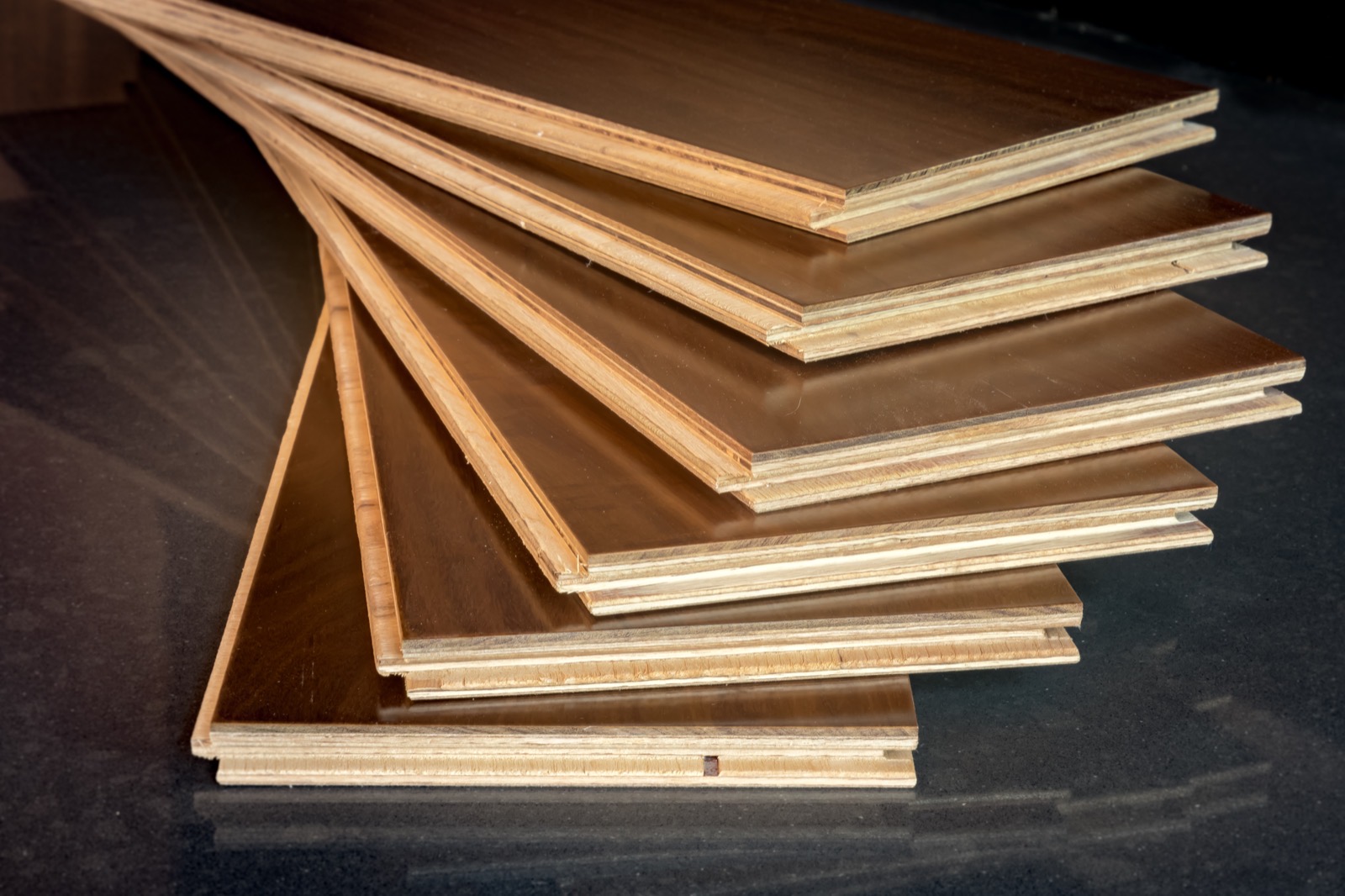
Engineered hardwood is a sandwich. A real hardwood wear layer sits on top of a core made of plywood or high-density fiberboard (HDF). The core is where the stability comes from. Layers of wood or fiber are glued together with opposing grain directions, like plywood. This cross-grain construction resists expansion and contraction because the layers work against each other.
The wear layer is still real hardwood, though it's thinner than solid flooring. It reacts to moisture at the surface just like solid wood does. But the core underneath resists the swelling, so the overall plank stays flatter.
This works well. But it only works if the subfloor underneath is dry and vapor control is in place. If moisture is migrating up through the slab or crawlspace, engineered flooring will still cup and buckle. The core helps, but it doesn't overcome a moisture problem.
Core type makes a real difference
Plywood cores and HDF cores behave differently in high-humidity environments. Plywood-core engineered floors handle humidity variation reasonably well because plywood already has been exposed to moisture and has dimensioned stabilized. HDF-core products sometimes perform better in extreme swings because the fiber is compressed and less reactive. But HDF adds weight and cost.
Thicker wear layers and thicker cores generally perform better than thin, budget options. A three-millimeter wear layer gives you real hardwood character and the option to sand and refinish if needed. A one-millimeter wear layer means you cannot refinish, and it wears through faster.
Before buying engineered hardwood, check the core type, wear layer thickness, plank width, and warranty conditions. Narrow-to-medium planks (three to five inches) in plywood-core construction are a good starting point for Douglas County homes.
When to choose engineered over solid
Engineered hardwood makes sense for below-grade spaces like basements and finished crawlspaces where solid floors would be too risky. It works over radiant heat systems because the cross-ply construction resists warping. It's appropriate over slab-on-grade if vapor control is in place, because the core is less reactive to slab moisture than solid wood.
Engineered flooring also allows wider planks in moisture-prone environments. A nine-inch engineered plank with a plywood core will move less than a nine-inch solid plank, though it will still move. If you want the visual impact of wide boards but your home has humidity challenges, engineered is worth considering.
Where engineered still needs your attention
Engineered is not a substitute for proper site prep. You still must test subfloor moisture, address vapor barriers, and control indoor humidity. If your crawlspace is vented and wet, engineered flooring over it will still fail. If your concrete slab is pulling moisture without a proper vapor barrier, engineered wood will still cup.
Acclimation requirements vary by brand and core type. Some engineered products need less acclimation time than solid hardwood. Others need just as much. Check the manufacturer specifications. And acclimate in the living space with the HVAC on, not in a garage or warehouse.
The adhesive system matters. Some engineered products are nailed. Some are glued. Some are glued and nailed. Use only manufacturer-approved adhesives and systems, because the wrong adhesive can void warranty and cause delamination that you cannot fix without pulling the floor.
Installation method changes how the floor behaves
Engineered hardwood can be floated, glued down, or nailed, depending on the product and subfloor. Floating floors feel slightly different underfoot than nailed or glued floors. They may feel springy or sound hollow in some spots. Glued floors are the quietest and most solid feeling. Nailed floors split the difference.
Floating works well in remodels where you don't want to disturb the existing structure. It also works in homes with high-humidity summer basements where you want to decouple the floor from slab moisture. Gluing makes the most sense in damp Douglas County crawlspace homes where you want maximum connection to the subfloor.
Keeping engineered flooring stable year-round
Humidity control is not optional. Douglas County homes can swing from 30% RH in winter to 70% RH in summer. That swing drives movement regardless of product type. Use a dehumidifier in summer if indoor humidity climbs above 60%. Use a humidifier in winter if it drops below 25%. This sounds like work, but it is the cost of keeping any hardwood floor stable long-term.
Crawlspace encapsulation helps a lot. If you have a vented crawlspace, closing it off and controlling humidity underneath reduces the moisture pressure on the floor and cuts seasonal swings by half or more.
Planning around Oregon conditions
Engineered hardwood shines in challenging moisture environments when the core type is right, the wear layer is substantial, and site prep is done properly. It's not a workaround that lets you skip moisture testing and vapor barriers. It's a better product choice given the conditions you start with.
Before choosing engineered or solid, have your site tested. We measure subfloor moisture content, map indoor humidity over several days, inspect crawlspace or slab conditions, and assess the moisture risk for your specific home. That assessment tells you whether solid hardwood is appropriate, whether engineered is a better fit, or whether extra moisture mitigation is needed before any flooring goes down.
If you're planning hardwood in a Roseburg-area home and want to know whether engineered or solid is the right choice for your site conditions, Back to the Wood Floors can test the space and give you a clear answer. Give us a call.
Ready to transform your floors? Back to the Wood Floors has been serving Douglas County since 1990.
Get a Free Quote See Our Work