
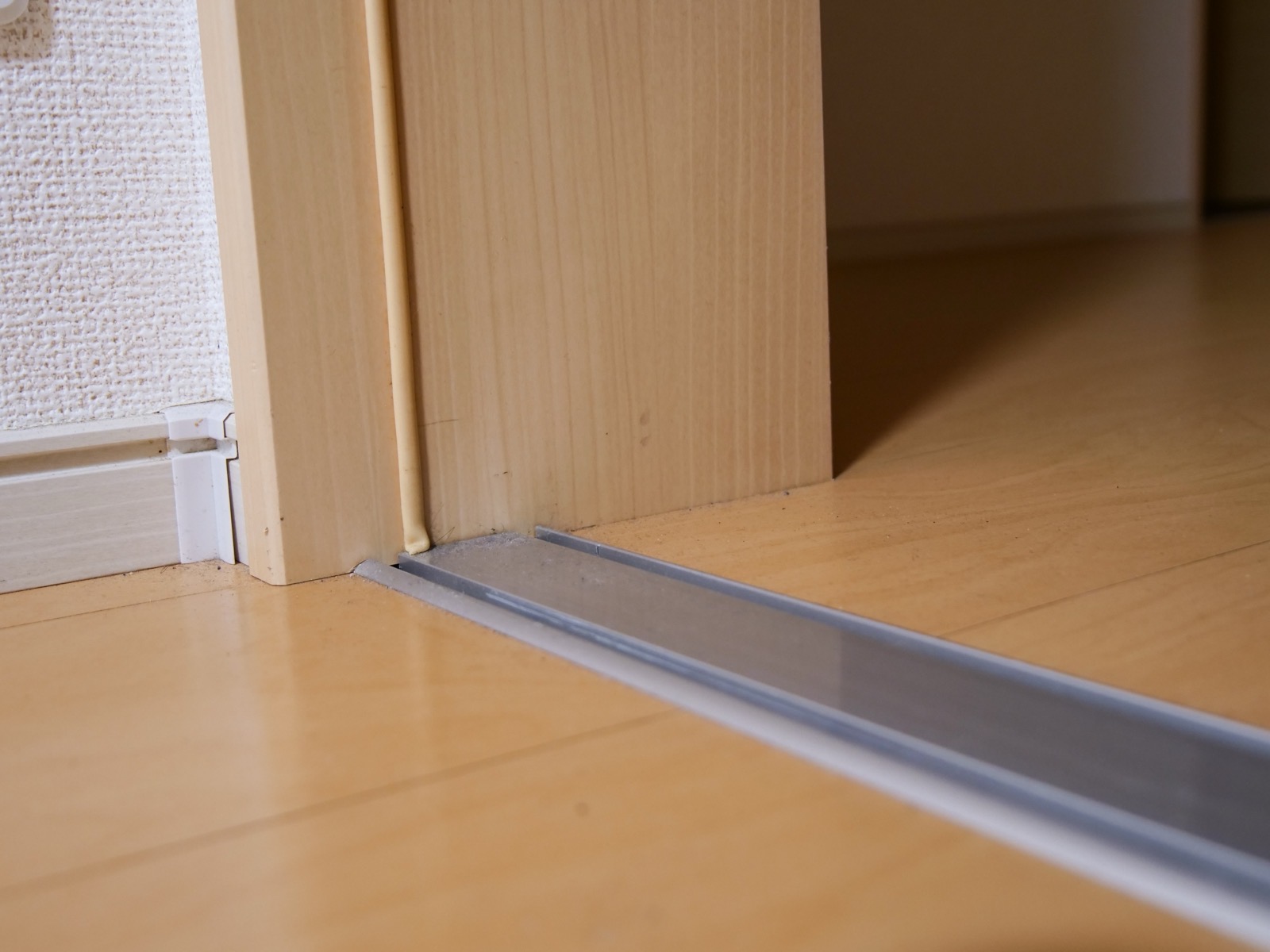
Getting Transitions Right Between Rooms
Doorways are where hardwood meets other flooring, or where hardwood transitions from one room to another. They're also where high foot traffic, movement, and structural breaks between rooms collide. A transition that is not planned can crack, squeak, separate, or create a trip hazard. A transition that is planned looks clean and stays solid for decades.
The difference is details: expansion space, molding type, height coordination, and fastening that doesn't pin the floating floor.
Why doorways are stress points
A doorway concentrates stress. The floor widens and shrinks with humidity, but a doorway is a narrow opening where two separate floor systems or two different rooms meet. If the opening is tight or if the details are not right, the hardwood cannot move freely, and movement gets blocked or twisted.
Foot traffic at doorways is heavier than anywhere else in most homes. People step down hard as they transition from one room to another. That repeated impact and potential twisting of boards under the transition molding can crack tongues or separate joints if there is no clearance.
Traffic also means potential spills. Water from a wet umbrella, a glass dropped on transition, a dog shaking off in a doorway. If the molding and substrate are not detailed correctly, water finds its way in and damages wood.
Main transition types and when to use each
Reducers are moldings that step down from hardwood to a lower adjacent floor (carpet, tile, or vinyl). Reducers slope from the hardwood height down to the adjacent material. They protect the hardwood edge and guide foot traffic across the height change.
T-moldings bridge height differences where two floors meet at the same elevation. One side of the T attaches to each floor. T-moldings work between hardwood and ceramic tile, between hardwood and laminate, or between two hardwood sections with a gap between them.
Thresholds and saddles are solid pieces that span the opening, typically used at exterior doors or between a main room and a step-down room. They're heavy-looking compared to other transitions but they're appropriate for significant height differences.
End caps are simple pieces that cap the edge of hardwood where it ends without meeting another floor (like at the edge of an island or a peninsula).
Flush transitions are boards laid edge-to-edge with minimal molding, creating a seamless look. These work only when two floors are exactly the same height and when the materials can be locked together. They look beautiful but require tight height control and proper substrate prep.
In all cases, match the species and finish of the transition molding to the hardwood as closely as possible. Grain direction matters too. A transition that looks like it belongs to the floor is more refined than one that looks like an afterthought.
Planning expansion at doorways
Hardwood needs space to move. At the perimeter of a room, you leave a gap—typically a half inch or more—that baseboard covers. At doorways and transitions, that same expansion space must be maintained.
A reducer or T-molding covers the gap but does not eliminate it. The hardwood must be able to move underneath. If the molding is fastened so tight that it pinches the hardwood, the floor is constrained and cannot expand normally. Over a season of humidity increase, pressure builds and the floor will buckle or push boards up at the transition.
The fastening method is critical. Do not fasten the transition molding to the hardwood flooring itself. Fasten it to the subfloor underneath. The hardwood slides underneath the molding with room to move. This is especially important in floating floor systems, where the hardwood has no fasteners connecting it to the subfloor.
Managing height and underlayment
Height differences at transitions are often surprises. The hardwood is one thickness. Tile with underlayment is another. Carpet with padding is another. Laminate is another. Before installation begins, mock up the height difference.
A ceramic tile with thin-set adhesive and underlayment can easily be half an inch higher than hardwood with no underlayment. A carpet with standard padding is typically three-eighths of an inch thick. These differences matter.
If heights don't match, you have options. Use thinner underlayment under the hardwood to raise it. Use no underlayment at all if the subfloor is solid and flat. Adjust the adjacent floor by removing some of its underlayment or backing. Measure and plan before installation to avoid improvising a transition after the fact.
Trip hazards are a real concern. If the height difference is more than one-quarter inch, you need a sloped or ramped transition. A sharp step is a fall risk. A reducer handles height differences up to about one-half inch if it's properly sloped.
Detail execution: undercutting and fastening
Undercutting door jambs and casings means cutting into the trim so the hardwood slides underneath without being blocked. A power trim saw or oscillating multi-tool with a blade that matches the door trim thickness does this precisely.
The goal is a tight fit. The edge of the trim sits low enough that the hardwood passes under it, but not so low that a gap shows. This takes care. A rough undercut reveals gaps or looks amateur.
Do not overcut. Cutting too deep into the jamb weakens the trim and creates structural issues with the door frame. Cut only far enough to let the hardwood pass.
Fastening to subfloor, not to the hardwood
On floating floors, fastening the transition molding to the flooring itself locks the floor and prevents movement. Do not do this. Fasten the reducer or T-molding to the subfloor with nails or screws. The hardwood slides underneath with clearance to move.
On nailed or glued hardwood, you have more options, but still avoid pinning the floor with the molding. Fasten the molding to the subfloor when possible, or use fasteners that allow the hardwood to move slightly around them.
At exterior doors where weather and water are concerns, fastening through the molding into the subfloor and then caulking the seam between the molding and the hardwood helps seal the joint without trapping movement.
A transition checklist before installation
Before any hardwood is installed, know what transitions you're planning. What materials meet the hardwood? What are the height differences? Where will gaps or steps be? What molding type does the space call for?
Coordinate with whoever is installing adjacent flooring (tile, carpet, laminate). Make sure underlayment thickness and height are decided beforehand so the transition detail works.
Plan where molding fasteners will go. Mark them so the installer knows not to place hardwood fasteners in those areas.
Specify that the molding must be fastened to the subfloor, not to the hardwood, and that expansion clearance must be maintained.
Planning transitions for your Roseburg home
Transitions are what separate a polished, high-end installation from a DIY look. The details are simple, but they have to be right. Before your hardwood installation begins, we'll work with you to plan every transition. We'll coordinate heights, select moldings that match your hardwood, and execute the details so the floor looks seamless and stays solid.
For a Roseburg-area hardwood installation with transitions that are done right, contact Back to the Wood Floors. We'll create a layout and transition plan as part of your full installation contract. Give us a call.
Ready to transform your floors? Back to the Wood Floors has been serving Douglas County since 1990.
Get a Free Quote See Our Work