
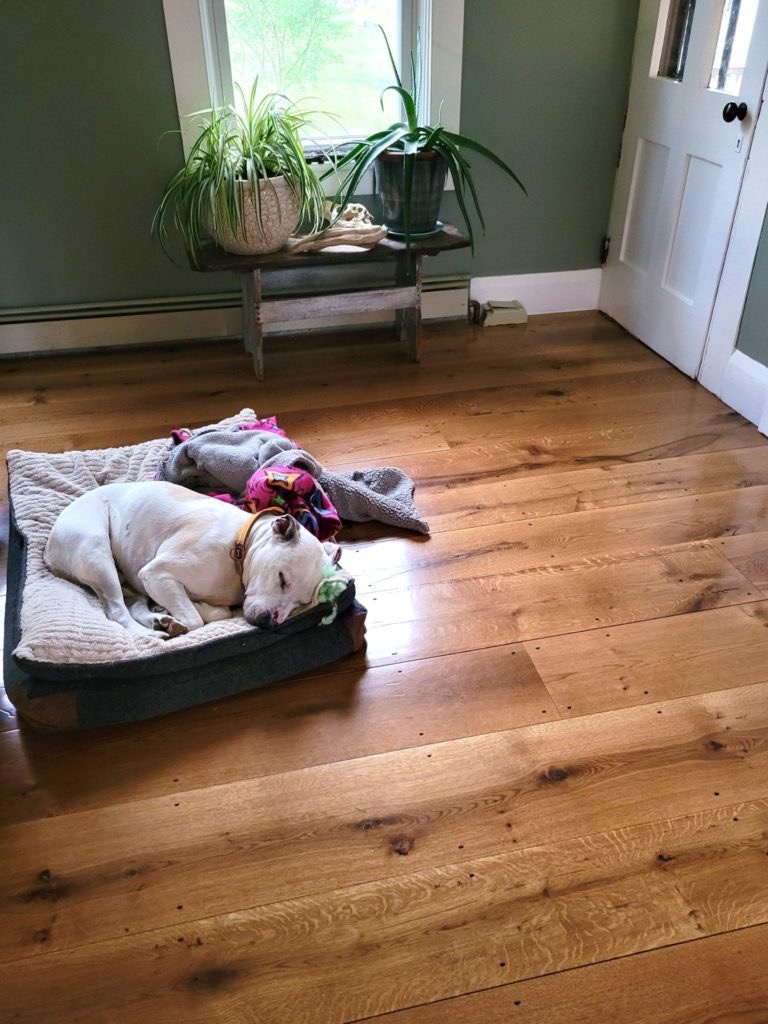
Hardwood Floors With Dogs and Cats
No hardwood is scratch-proof. But most hardwood is scratch-manageable with the right choices and habits.
The goal isn't to have a floor that looks pristine after a year of pet traffic. The goal is a floor that hides normal wear so it looks intentional rather than damaged, and a floor that resists the moisture and staining that come with pet accidents.
What makes scratches visible
Scratches show up more on some floors than others because of three factors: hardness, grain pattern, and sheen.
Hardness determines how easily claws dent the wood. The Janka scale measures this. White oak and hickory rank higher than walnut or ash. Harder woods dent less, but they're not scratch-proof. Nothing is.
Grain pattern and color do the real work of hiding wear. A floor with character grain (hand-scraped, distressed, or naturally textured) absorbs scratches into the visual noise. A smooth, uniform floor with straight grain makes every mark visible. Light colors show dark scratches more obviously than medium or dark stains.
Sheen makes a huge difference. Gloss and semi-gloss finishes reflect light, so scratches and footprints show up as shadows. Matte and satin sheens diffuse light, so scratches disappear into the texture. If pet scratch visibility is your top concern, choose matte or satin sheen and a finish with character grain.
Finish and water resistance
The finish coat protects the surface and affects water resistance at the top layer. A quality urethane or oil-based finish is tougher than a wax or water-based finish. The catch is this: the finish doesn't protect seams or board edges. Water that gets into a seam travels under the finish and causes cupping or staining that refinishing won't fix.
Let the finish cure completely before heavy pet traffic. Polyurethane cures in a few days, but it doesn't reach full hardness for 2-3 weeks. Dogs running on a half-cured finish can create dents that a fully cured floor would resist.
Water bowl management
Put a waterproof mat under the food and water bowls. Not a cotton mat that soaks water into the wood underneath. A genuine waterproof mat, or a shallow drip tray. Water sitting under a mat overnight will soak into seams and cause cupping over weeks.
Repeated small spills are often worse than one big spill. One big spill you see and clean immediately. Small daily spills around a water bowl soak into seams over time without ever pooling visibly. By the time you notice cupping, the damage is weeks old.
Nail wear and traction
Keep your pet's nails trimmed. Long nails dig in and leave visible scratches. Overgrown nails also increase traction noise on the floor.
In winter, keep the hallway and entry areas clean and dry. Wet paws tracked through a doorway create a high-traffic zone where moisture, dirt, and nail wear combine. Area rugs in high-speed zones (hallways, doorways, launch zones where pets accelerate) protect the floor and reduce slipping.
Avoid rubber-backed rugs unless they're specifically labeled safe for hardwood. Standard rubber backing traps moisture and can discolor or soften a finish. If you use a rug, put a non-slip pad underneath instead of relying on the rug's backing.
Installation choices that help
Start with a flat subfloor. Tight joints require a level surface. If the subfloor has high spots or low spots, the installer will have to drive nails or glue harder in some areas to pull boards together, creating uneven surfaces or dull sounds.
Proper expansion gaps let boards move with seasonal humidity without rocking. Tight joints sealed against expansion are a recipe for buckling. The installer should leave gaps at perimeter walls and at any concrete, tile, or stone transitions.
Transitions at doorways and exterior entries matter. A trim piece or threshold that covers the edge of the board protects against lifting and foot traffic wear. It also sheds water instead of letting it pool.
In homes with frequent door traffic and seasonal humidity swings, engineered hardwood may be the safer choice. The cross-ply construction handles moisture variation better than solid wood.
What we help you choose
Before installation, we talk through species and finish options based on your household. We show you samples in different light and explain how matte versus satin sheen and grain pattern affect visibility of scratches and wear. We discuss nail care, water bowl placement, and rug strategies so you're set up for success.
We confirm that your subfloor is flat and properly prepared. We plan the board layout and installation method to handle the moisture and movement that come with door traffic and pet activities.
We walk you through the cure period and explain why waiting before heavy traffic is worth it. We also recommend a maintenance schedule of annual recoating or spot repairs so small wear doesn't compound.
If you have a pet household in Douglas County and you want a hardwood floor that stays beautiful, we can help you choose the right product and install it correctly. Give us a call.
Ready to transform your floors? Back to the Wood Floors has been serving Douglas County since 1990.
Get a Free Quote See Our Work