
Living in Your House During a Hardwood Install
Most hardwood installations happen while you're still living in the home. You can't move out for two weeks. You have kids, pets, work schedules, and meals to prepare. The goal is to get the new floors while keeping disruption manageable.
This requires planning. It means understanding what work is happening when, which areas will be inaccessible, when dust will be heaviest, and what precautions protect your family and the rest of your home. A contractor who treats this seriously builds a site plan that keeps the home livable while the installation proceeds.
What creates dust during a hardwood project
Dust comes from several sources. Removing old carpet, vinyl, or laminate generates debris and fine particles. Subfloor sanding or leveling compounds create significant dust. Cutting hardwood boards, whether done outside or in a cutting station, creates sawdust. Demolition and trim removal add to dust volume.
Not all dust is created equal. Demolition dust—old drywall particles, insulation fibers, asbestos-containing materials in older homes—is the dirtiest and most concerning. Hardwood sawdust is relatively benign but still settles on surfaces throughout the home if not contained.
A contractor's approach to containment and cleanup makes the difference between a manageable project and a month of wiping down surfaces and finding dust in places you didn't think possible.
Containment best practices
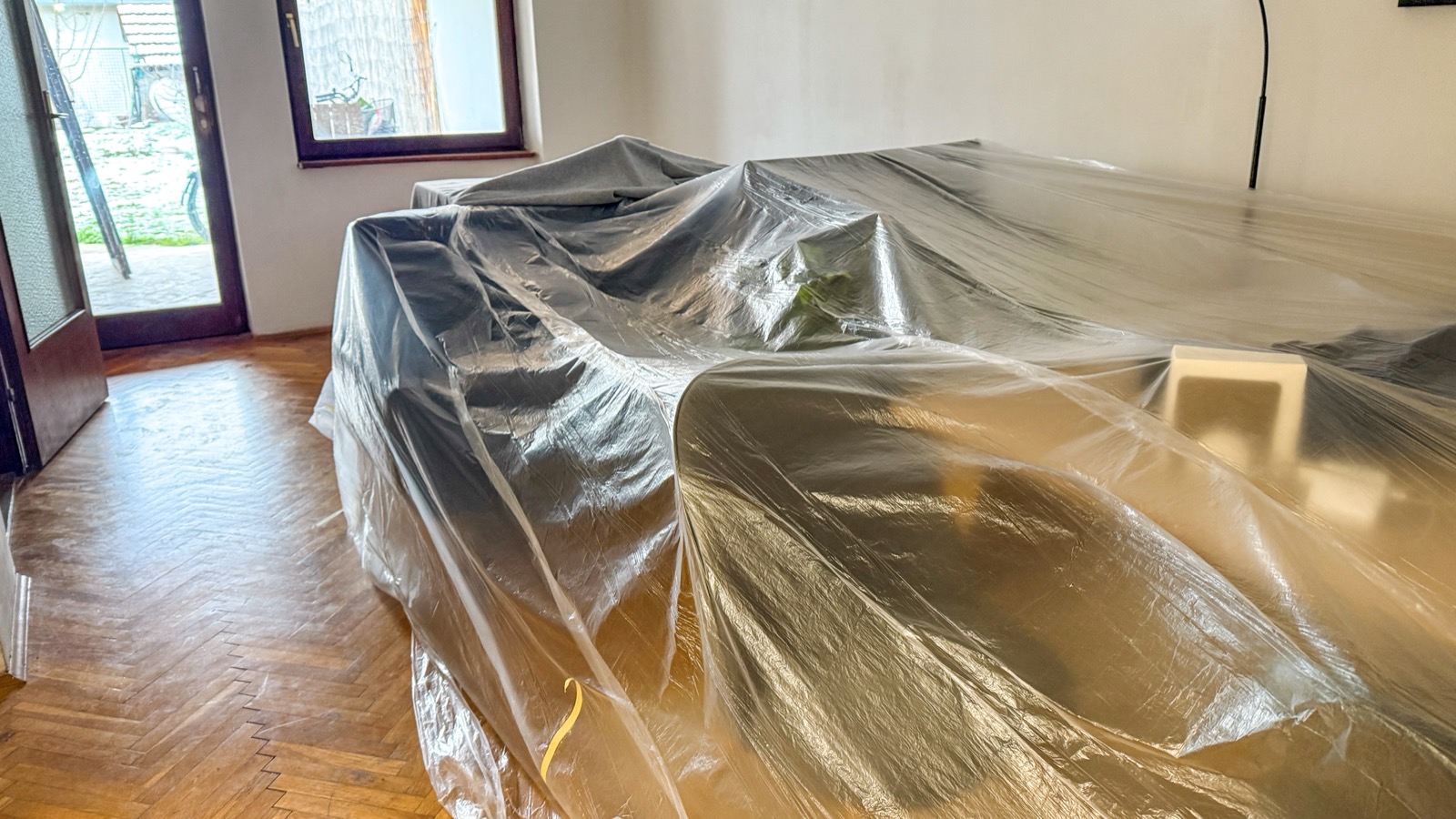
The work area should be physically isolated from the rest of the home. A plastic zipper wall, sealed with tape, divides the installation zone from living spaces. This contains dust in the work area and keeps it from migrating through hallways and doorways.
HVAC returns should be sealed off in the work area to prevent dust from being drawn through the ductwork and distributed throughout the house. Opening windows during cold or wet weather isn't practical, so mechanical containment is the solution.
A single entry and exit point for workers keeps traffic paths controlled. Workers brush off and clean their shoes at the entry point. Tools and materials are brought in through the designated entry, not tracked through the house.
The protection extends beyond the immediate work zone. Doorways to adjacent rooms should have temporary barriers or plastic coverings. If the installation is on the second floor, stairwells should be protected so dust doesn't travel down to the first floor.
Flooring in hallways and pathways that workers use should be covered with cardboard or plastic sheeting to prevent dust and debris from being tracked through the house. This protection is removed at the end of each day, and the pathways are cleaned.
Tool and technique choices that minimize airborne dust
Cutting should be done outside when possible. When cutting indoors, a designated area with vacuum-assisted capture is essential. A HEPA-filtered vacuum is better than a standard shop vac, especially in homes with children or anyone with allergies. Sanding or grinding also requires vacuum capture. The crew should clean daily at the end of each work day, preventing dust accumulation on furniture and surfaces in adjacent areas.
Odor management
Adhesives and underlayments can have strong odors; newer products are low-VOC (low volatile organic compounds) for less odor. Ask about low-VOC options. Site-finished stains and polyurethane have significant odor, particularly oil-based products. Ventilation planning is critical: opening windows helps if weather permits, and running an air scrubber or portable fan reduces lingering odors. Ask the crew how they'll manage ventilation in your home's layout.
Managing pets and children during the project
Pets should be kept out of the work area. Sawdust in a dog's paws and fur, nails from demo scattered on the floor, and the disruption of their routine stress animals out.
If possible, move pet beds, bowls, and litter boxes away from the work area. Establish a no-go zone for pets that's enforced consistently.
For people with pet allergies, ensure that the crew knows this and maintains the containment barriers strictly. Dust from the work area can carry pet dander and should not cross the barrier.
Children need to understand that the work zone is off-limits. Nails, fasteners, tools, and machinery are present. The disruption and noise are significant. If the home has young children, discuss with the contractor how to phase the work so noisy demolition or cutting happens during school hours or nap times when possible.
A temporary rearrangement of sleeping areas might be necessary if the main bedroom is being worked on. Dust and odor drift even with containment, and sleeping in a construction zone isn't restful.
Noise and work hours
Demolition is loud. Sanding is loud. Cutting is loud. Nail guns, compressors, and power tools generate significant noise.
Establish work hours with the contractor. Early morning work (starting at 8 or 9 a.m.) is better than work that stretches into evening. Ask that the loudest work be concentrated in specific days if possible, giving you some days that are quieter.
Earplugs or noise-canceling headphones help if you're working from home during the installation. Some people find they can be productive with background noise; others find it impossible to concentrate. If you have flexibility in your schedule, leaving the home during the loudest phases might be the best solution.
Debris handling and jobsite cleanliness
Dumpsters should be positioned outside and filled regularly, not blocking your driveway for weeks. Nails and tack strips must be contained and disposed of properly, not scattered in the work area. A professional crew maintains a tidy jobsite: cables and hoses don't create trip hazards, materials don't block bathroom access, and daily removal prevents the job from becoming an eyesore.
Creating a realistic plan at the pre-construction meeting
Before work starts, walk the space with the contractor and discuss the phasing. Which room gets demo first? Where will materials be stored? How many days will the main living area be disrupted? When will trim work happen? Which rooms will be inaccessible at different times?
Get a written schedule with dates and phases. Discuss pet and child management. Ask about dust containment specifics.
If you have concerns about odor or have family members with sensitivities, discuss product choices and ventilation strategy now, not when work has started.
A pre-construction meeting that addresses these logistics prevents frustration and sets expectations for both you and the crew.
The disruption is temporary
A hardwood installation in an occupied home creates two to four weeks of disruption. It's not zero-impact living, but it can be managed with planning. A contractor who thinks through containment, daily cleanup, and phasing demonstrates respect for your home and your time.
If you're planning hardwood floors in Roseburg and will be living in the home during the installation, Back to the Wood Floors includes site planning and dust/odor management as part of our process. Call us to discuss how we'll keep your home livable while delivering the new floors.
Ready to transform your floors? Back to the Wood Floors has been serving Douglas County since 1990.
Get a Free Quote See Our Work