
Putting Hardwood Over Concrete in Roseburg
Concrete slabs can be a moisture trap that destroys hardwood floors. A slab that looks and feels dry on the surface can release enough moisture vapor from below to swell hardwood, break down adhesives, and cause cupping and adhesive failure within a year. Hardwood over concrete in Roseburg is possible, but only with proper moisture testing and the right installation system.
Concrete doesn't dry out completely. It's porous and continues to emit moisture vapor for years after it's poured, driven by groundwater, capillary action, and hydrostatic pressure. In Douglas County's wet climate, that moisture keeps moving upward. Without vapor control, it migrates into the hardwood.
How moisture moves through slabs
Water comes from two directions. It rises from the soil and groundwater beneath the slab through capillary action, a process where water moves upward in small pores against gravity. In Roseburg, with high water tables and rainfall, capillary moisture is constant.
It also moves laterally from the soil at the slab perimeter, especially if exterior grading slopes toward the foundation or downspouts drain near the house.
Once water enters the slab from below, it evaporates from the top surface of the slab. That evaporation releases moisture vapor into the space above. If there's no vapor barrier, that moisture vapor rises into the subfloor and hardwood. The process is slow but relentless, and it doesn't require standing water or visible dampness.
Testing before installation is non-negotiable
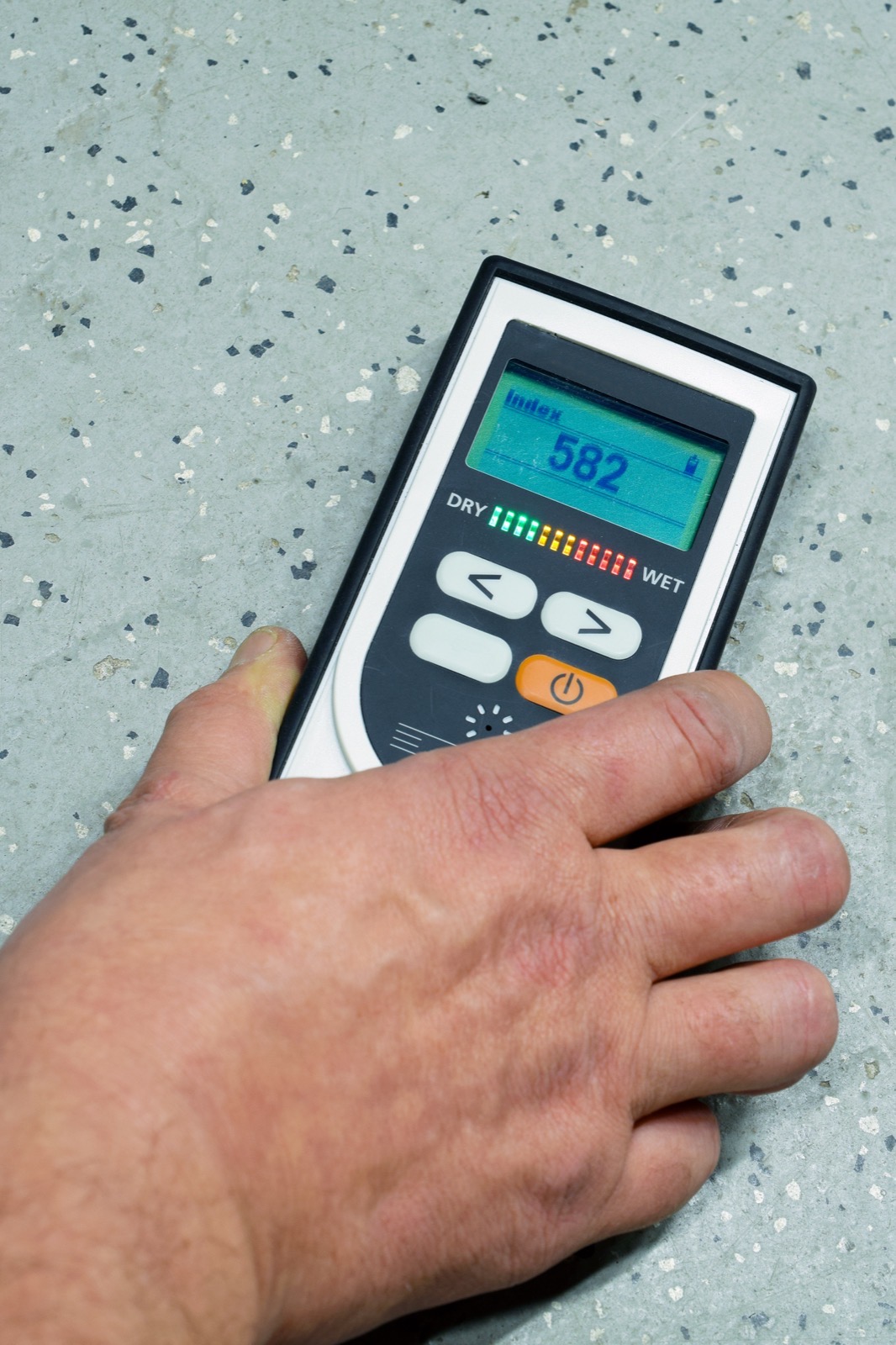
Surface moisture testing won't tell you the truth. A moisture meter on top of the concrete can read 3%, while vapor being emitted from below is still high enough to ruin hardwood.
The correct test measures in-slab relative humidity (RH) using calcium chloride kits or electronic RH probes placed on the slab under plastic for 24 hours. These tests measure the moisture vapor environment inside the concrete.
We place test kits in multiple locations, including near the perimeter, in the center of the slab, in any areas that have felt wet or had ponding, and in rooms with different exposure (kitchen near exterior wall, interior bedroom, basement). Different parts of the slab have different RH profiles.
Test results determine what's acceptable. Many hardwood flooring manufacturers specify that slabs should be below 85% RH. Some adhesives work up to 95% RH, but that's pushing limits. If your slab tests above 85% RH, you need a moisture mitigation system, not just a basic vapor retarder.
The moisture test is inexpensive compared to replacing failed hardwood. It's the decision point that prevents disaster.
Installation systems for concrete
If your slab tests low (under 85% RH), a basic vapor retarder or a quality underlayment can work. Polyethylene sheeting, felt, or modern vapor-retarder underlayments laid over the slab before the hardwood give you a moisture break.
If your slab tests medium to high (85-95% RH), you need a true moisture mitigation system. This includes epoxy sealers, polyethylene sheets with taped seams, or specialty underlayments rated for high-RH slabs. Seams must be sealed because moisture vapor finds every gap.
For slabs over 95% RH, you may need a full mitigation system combined with exterior drainage improvements or interior dehumidification. At that moisture level, the slab needs repair first.
The adhesive choice depends on the mitigation system and moisture level. Some adhesives are designed for high-moisture slabs and have moisture resistance built in. Others are basic and only work on dry slabs. Your chosen mitigation product and adhesive must be compatible. The manufacturer's technical specs will list approved combinations.
Adhesive and product selection
Hardwood can go on slabs, but glue-down is the typical method because nails can't hold on concrete. Floating floors are an option if the slab is stable and the moisture is controlled, but floating relies on underlayment to handle the moisture.
Engineered hardwood is usually the better choice over concrete because it's more dimensionally stable than solid hardwood. The cross-ply core resists swelling and cupping. Solid hardwood over concrete is possible but requires stricter moisture control and may have manufacturer limitations.
Plank width matters. Wide planks (4 to 7 inches) are more sensitive to moisture swings and more likely to cup on a damp slab. Narrower planks (2.25 to 3.25 inches) respond less dramatically to moisture changes.
Common Roseburg mistakes
Installing hardwood on an untested slab is the biggest mistake. Contractors see a concrete slab and assume it's fine. Six months later, the floor is cupping and the adhesive is failing.
Skipping exterior grading and drainage work is another. A slab that's getting water pushed at it from outside will remain damp no matter what moisture barrier you use. Gutters must discharge away from the foundation. Soil must slope away. If the slab is truly getting hydrostatic pressure, interior mitigation alone won't fix it.
Cutting corners on seam sealing when using polyethylene or specialty underlayments defeats the purpose. Seams must be taped or sealed. Moisture vapor finds every gap and bypasses the barrier.
Using solid hardwood with inadequate moisture testing is risky. If the slab is wet, solid hardwood will absorb that moisture and move. The cupping and splitting can be dramatic.
What to expect during and after installation
Installation over concrete takes longer because the vapor barrier or mitigation system must be laid first. Depending on the product, seams may need sealing, and perimeter edges must be detailed to maintain the moisture barrier integrity.
After installation, expect the floor to take longer to stabilize. Moisture equilibration happens more slowly on a slab than on wood subfloors.
Monitor the floor through the first wet and dry seasons. Hardwood normally experiences small seasonal movement. If you see excessive gapping in winter or cupping in spring, that points to a moisture issue that was missed or a mitigation system that failed.
Planning a slab installation
If you're building on a concrete slab or installing over an existing slab in Roseburg, the plan starts with testing. Schedule Back to the Wood Floors for in-slab RH testing and a moisture assessment. We'll tell you the slab's moisture status and what mitigation system is needed for your chosen product.
We'll verify that exterior drainage and grading are managing water correctly. If they're not, we'll recommend exterior work before flooring is installed.
We'll choose a compatible adhesive and mitigation product for your moisture level and hardwood type, then install with seams and edges sealed properly. We'll document everything so your warranty is protected.
Hardwood over concrete in Roseburg is not inherently risky. It just requires testing, the right system, and professional installation. Contact us for a slab assessment and installation plan that matches your home's conditions.
Ready to transform your floors? Back to the Wood Floors has been serving Douglas County since 1990.
Get a Free Quote See Our Work