
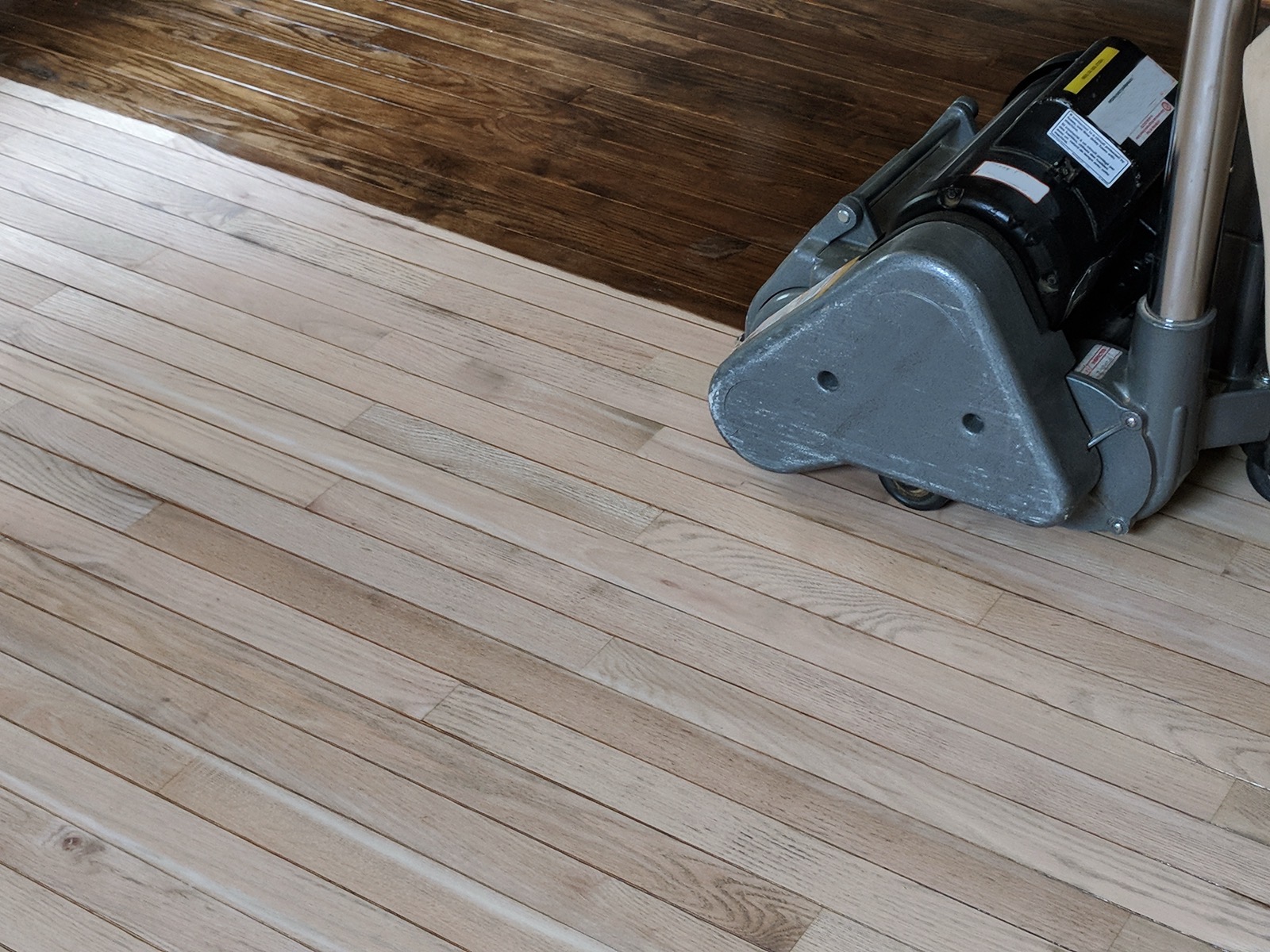
Refinish or Replace Your Hardwood Floors?
Refinishing makes sense when boards are flat and firm. Replacement is usually smarter when you have soft spots, cupping, or a floor too thin to sand again.
The decision comes down to what's wrong with the floor. Surface wear can be sanded out. Structural problems cannot.
What refinishing fixes and what it doesn't
Refinishing removes the finish coat and the top 1/16 to 1/8 inch of wood, depending on how aggressive the sanding is. This layer contains surface scratches, scuffs, pet wear, and dull finish. Refinishing can remove those things.
Refinishing does not fix cupping, crowning, soft spots, gaps that open and close seasonally, or boards that rock. These problems live deeper than the wear layer. You can sand the finish off a cupped board, but the board is still cupped. Refinishing a structurally failing floor is paying twice.
Identify your floor type first. Solid hardwood can be sanded, usually multiple times over its lifetime, depending on thickness. Engineered hardwood can be sanded only if the wear layer is thick enough. Some engineered products have a 2mm wear layer that allows only one light refinish. Laminate cannot be sanded at all. If you're unsure which type you have, pull a transition trim and look at the edge.
Refinish-friendly signs
Look for boards that are flat underfoot. Walk across the floor in socks. Does it feel smooth, or do you step on high spots and dips? A straightedge across a few boards will show cupping or crowning. Run a 6-foot straightedge in different directions: along boards, across boards, and diagonally. If it rocks, the floor isn't flat enough to refinish successfully. The sander will knock down high spots, but the uneven subfloor will pull the sand pattern into wave-like grooves.
Check whether boards feel firm. Press your heel on a few spots. Does the floor flex or bounce, or does it feel solid? A floor that bounces or makes a popping sound when you step on it has structural movement or a loose subfloor. Refinishing won't fix that.
Scratches and wear: if the visible damage is shallow and feels smooth when you run your fingernail across it, refinishing will likely remove it. If the scratch is deep or the damage feels raised or rough, it may go deeper than the top coat.
Light discoloration: if the color difference is subtle and doesn't feel raised, refinishing can remove it. Dark stains, especially in seams or along seams, often mean moisture or chemicals have penetrated the fibers. Refinishing may lighten them, but rarely removes them completely.
Take clear photos in natural daylight showing the wear pattern. Document high-traffic zones, scratches, and any areas where the finish looks dull or cloudy versus shiny.
Replace-likely signs
Cupping or crowning: if the edges are higher than the centers or the centers are higher than the edges, the floor has moisture movement or structural issues. Refinishing doesn't fix the underlying cause. You'll sand it flat and six months later the same cupping will return.
Seasonal gapping: if gaps open in winter and close in summer, or open and close unpredictably, moisture is still moving through the floor. This pattern usually means the moisture source hasn't been fixed. Refinishing over an unsolved moisture problem guarantees failure.
Soft spots or spongy areas: press with your heel. If some areas compress or feel softer than others, the subfloor or the boards themselves have moisture damage or rot. Subfloor damage must be repaired before any new hardwood is installed.
Squeaks and movement: walk slowly across the floor in socks. Mark squeaking areas with painter's tape. If the squeak pattern is widespread or if the floor makes popping or cracking sounds when you walk, the floor is moving. This usually means fasteners have loosened or the subfloor has cupped or warped. Refinishing won't tighten fasteners or flatten a subfloor.
Rocking or clicking boards: if individual boards rock side to side or click when you step on them, they're not secured tightly. This is a structural issue, not a finish issue.
Thickness and sanding limits
Hardwood can only be sanded a certain number of times before it runs out of wear layer. Check the transitions at doorways, vent cutouts, and baseboard gaps. Look for exposed nails, tongue edges that are exposed, or very thin edges where boards meet thresholds. These are signs the floor has been sanded many times already.
If you can see nail heads, exposed tongue, or very low edges at transitions, the floor may not have enough wood left to sand safely. A board sanded too thin loses strength and can splinter or cup.
For engineered hardwood, check the product specifications for the wear-layer thickness and how many refinishes are allowed. A 2mm wear layer might allow only one refinish. A 3mm layer might allow two.
Stains and water damage as a tipping point
Pet stains, especially dark circular spots, usually mean urine has soaked into the wood fibers. These stains are chemical, not just surface discoloration. Refinishing may lighten them, but odor often remains and the wood may feel soft or splintery. If the stain is dark and widespread, replacement is more predictable.
Water stains along seams or at the perimeter often mean moisture has been moving through the floor for a while. If cupping or soft fibers accompany the staining, the moisture problem hasn't been fixed. Refinishing without fixing the source is a waste of money.
Check around refrigerators, dishwashers, sinks, and exterior doors for repeating patterns. If the same area has been damaged multiple times, moisture is returning to the same spot. This is a sign that the subfloor or the moisture source still needs attention.
Cost and disruption comparison
Get an itemized quote that separates demolition, subfloor prep, material, labor, and finishing. This makes it easy to compare refinishing to replacement.
Refinishing typically runs 3 to 5 days, depending on floor size. You can't use the rooms during sanding and while the finish cures. Cure time is usually 5 to 7 days. Plan for two weeks of reduced access.
Replacement takes longer. Demolition, subfloor prep, material, and installation typically run 5 to 7 days. Cure time is the same. Plan for two weeks minimum.
If you're already replacing one room, consider the opportunity cost. If the bedroom is being redone, does the hallway need it too? Can you upgrade plank width or finish options at the same time? Single-room replacement is sometimes a good break point for a broader floor refresh.
Decision checklist
Before scheduling an evaluation, ask yourself:
Is the floor flat and firm underfoot? If not, it probably needs replacement.
Are boards stable, or do they move seasonally? If they move, the moisture problem isn't solved and refinishing won't last.
Is the visible damage mostly surface wear, or are there stains, soft spots, or structural movement? Surface wear refinishes well. Structural issues require replacement.
How many times has the floor been sanded? If transitions show nail heads or exposed edges, you're running out of wear layer.
What's the age and condition of the subfloor? If you're going to replace the floor anyway, subfloor condition becomes part of the cost and scope.
Call us for an on-site evaluation. We'll confirm the floor type, check for moisture movement, test subfloor condition, and tell you whether refinishing or replacement makes sense for your Roseburg home. We'll also walk you through cost and timeline so you can make a confident decision. Give us a call.
Ready to transform your floors? Back to the Wood Floors has been serving Douglas County since 1990.
Get a Free Quote See Our Work