
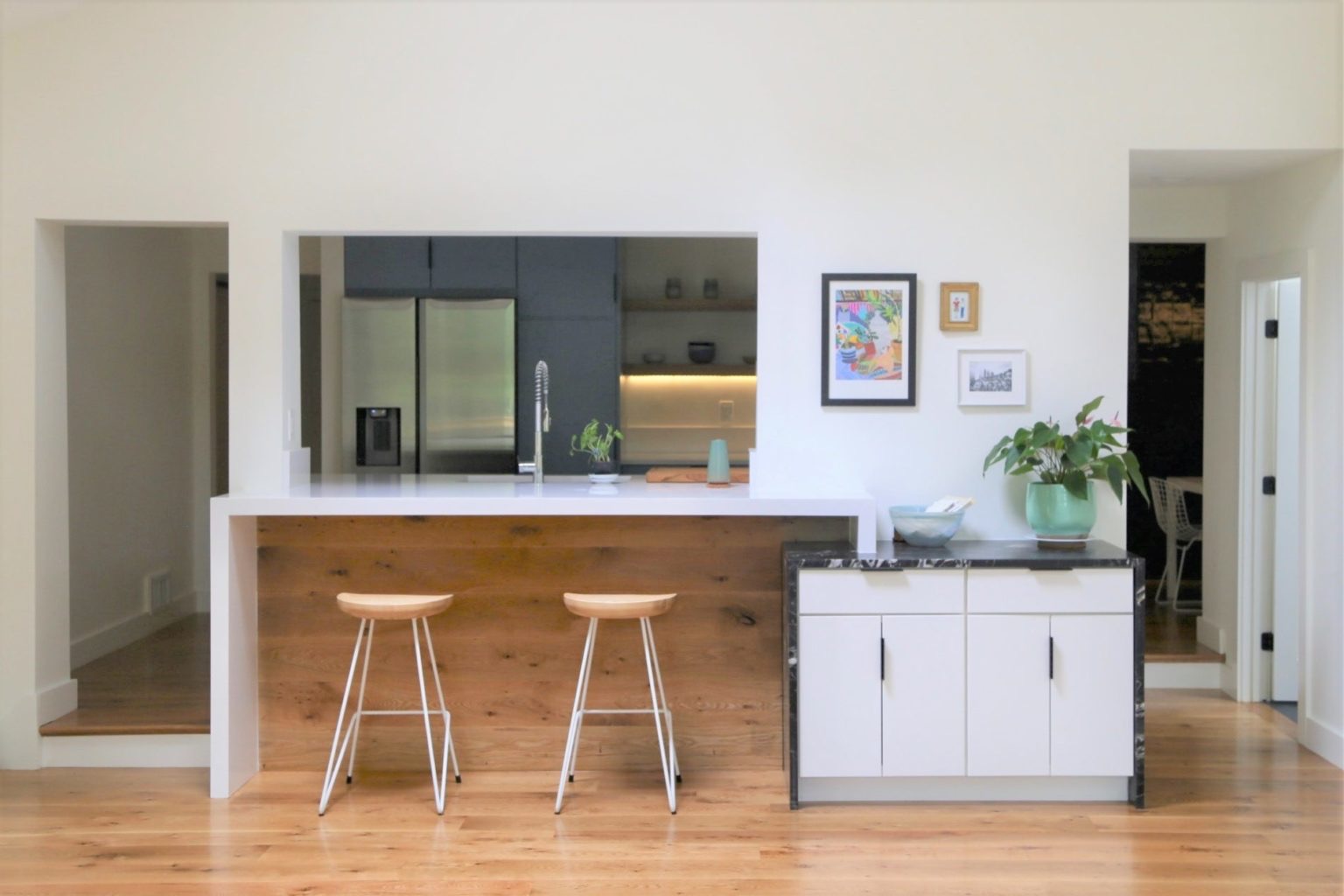
Should You Put Hardwood in Your Kitchen?
Yes, hardwood works in a kitchen. But most kitchen regrets come from skipping the moisture plan, not from the wood itself.
Kitchens are wet environments. Dishwashers leak. Refrigerators sweat. Spills happen next to sinks. Wet shoes track moisture from the door. These aren't surprises. They're the normal daily reality of a kitchen floor. The question isn't whether moisture will reach your hardwood. It will. The question is whether you've built your floor to handle it.
Why kitchens are different
Hardwood in a dining room or bedroom sits in stable humidity. Hardwood in a kitchen lives in moisture zones. A dishwasher drains and floods. A sink splashes. The transition from outside to inside brings wet feet over a concentrated 3-foot zone at the door. The refrigerator pulls moisture from the air and releases it near the floor. Each of these is a small water event. Together, they add up.
Wood that isn't designed or protected for these conditions cups, stains, and finishes fail. The finish looks cloudy. Seams open and trap dirt. Baseboards darken from moisture creep. These problems develop over months, not weeks, so homeowners often don't connect the damage to the daily moisture exposure.
Choosing the right product
Engineered hardwood is often the smarter choice in kitchens. Engineered has a cross-ply construction that resists the expansion and contraction that causes cupping. It stays stable through Oregon's humidity swings and daily moisture exposure better than solid wood.
If you want solid hardwood, species matters. Tighter-grained woods like oak and walnut resist dents better than softer species, and they hide water marks less obviously than light maple or ash. Finish type alone won't protect you. Even a high-quality polyurethane can't stop water that seeps in through seams or along the edges of boards. You need moisture protection built into the system, not painted on top.
Check the manufacturer's warranty. Some products have specific exclusions for kitchens. Know what you're getting before installation.
Details that prevent regret
Start with subfloor moisture testing. Before any wood arrives, confirm that your subfloor reads between 6% and 9% moisture content. Slab installations need a compatible vapor retarder system. This isn't just any plastic sheet, but one approved for the specific product and location. Crawlspaces need a ground vapor barrier, improved ventilation, or encapsulation depending on how wet the space gets.
Plan your board layout so seams avoid the dishwasher and sink cutouts when possible. Seams are where water seeps in. If you can't avoid a seam, detail it carefully during installation.
Use an underlayment and adhesive designed for the specific subfloor and moisture conditions. Nail-down or glue-down both work, but your installer needs to choose based on what's underneath and what happens during seasons when humidity spikes.
Leave expansion gaps at perimeter walls. Typically 1/2 inch to 3/4 inch depending on the product. These gaps let the floor expand without buckling. Baseboards and transitions will cover them.
Protection around appliances and plumbing
Install a drip pan under the dishwasher. It won't stop a catastrophic flood, but it catches the slow drips that seep into boards over weeks. Upgrade the supply lines to braided stainless steel with shut-off valves. Standard plastic or rubber hoses fail more often than people realize.
Check the refrigerator water line and icemaker connection. These are common culprits in kitchen cupping. A slow leak there goes unnoticed for a long time.
At the sink base, seal board edges where they meet the cabinet cutout. This keeps standing water and spray from the faucet from soaking in. It's a small detail that makes a real difference.
Transitions at doorways and exterior entries deserve attention too. Use thresholds or step-downs that shed water rather than trap it. Wet shoes coming in are a major source of moisture. An entry mat system that captures water before it reaches the hardwood saves trouble later.
Daily care matters
Wipe spills immediately. Don't let water sit on the surface while you deal with something else. Water on the finish for even an hour can start to dull or stain.
Never wet-mop your kitchen hardwood. Use a damp microfiber cloth (not wet) or a dry dust mop. Steam cleaners are absolutely off-limits. Steam drives moisture into seams and finishes, causing the exact damage you're trying to prevent.
Use only manufacturer-approved cleaners. Store-brand multi-purpose cleaners and oils can leave buildup or create a slippery surface that lets dirt grind into the finish.
Control indoor humidity. During Oregon's wet season, run a dehumidifier if your indoor humidity climbs above 50%. During dry season, if it drops below 30%, add a humidifier. Boards that live in stable humidity (between 35% and 50%) stay flat and tight. Boards that swing between 25% and 65% will open and close seasonally, inviting water into the gaps.
What we verify before installation
Before we lay a board in your Roseburg kitchen, we run a moisture assessment of the subfloor, check humidity in the room, and inspect appliance connections and plumbing. We photograph everything and document baseline readings so we have a record if something goes wrong later.
We verify that the kitchen is being conditioned to normal living temperature and humidity before we arrive. We confirm that HVAC is running and will continue to run during installation and curing. We map the high-risk zones (dishwasher, sink, refrigerator, entry) and plan the board layout and installation method for each.
We also check entry strategies. Where do wet shoes come in? Is there room for a boot tray or mat? How does the transition handle the moisture load?
None of this is complicated, but skipping it is almost guaranteed to produce regret.
If you're planning hardwood in your kitchen, we can test your subfloor, walk you through protection options, and detail the installation so it stays beautiful for decades. Give us a call.
Ready to transform your floors? Back to the Wood Floors has been serving Douglas County since 1990.
Get a Free Quote See Our Work