
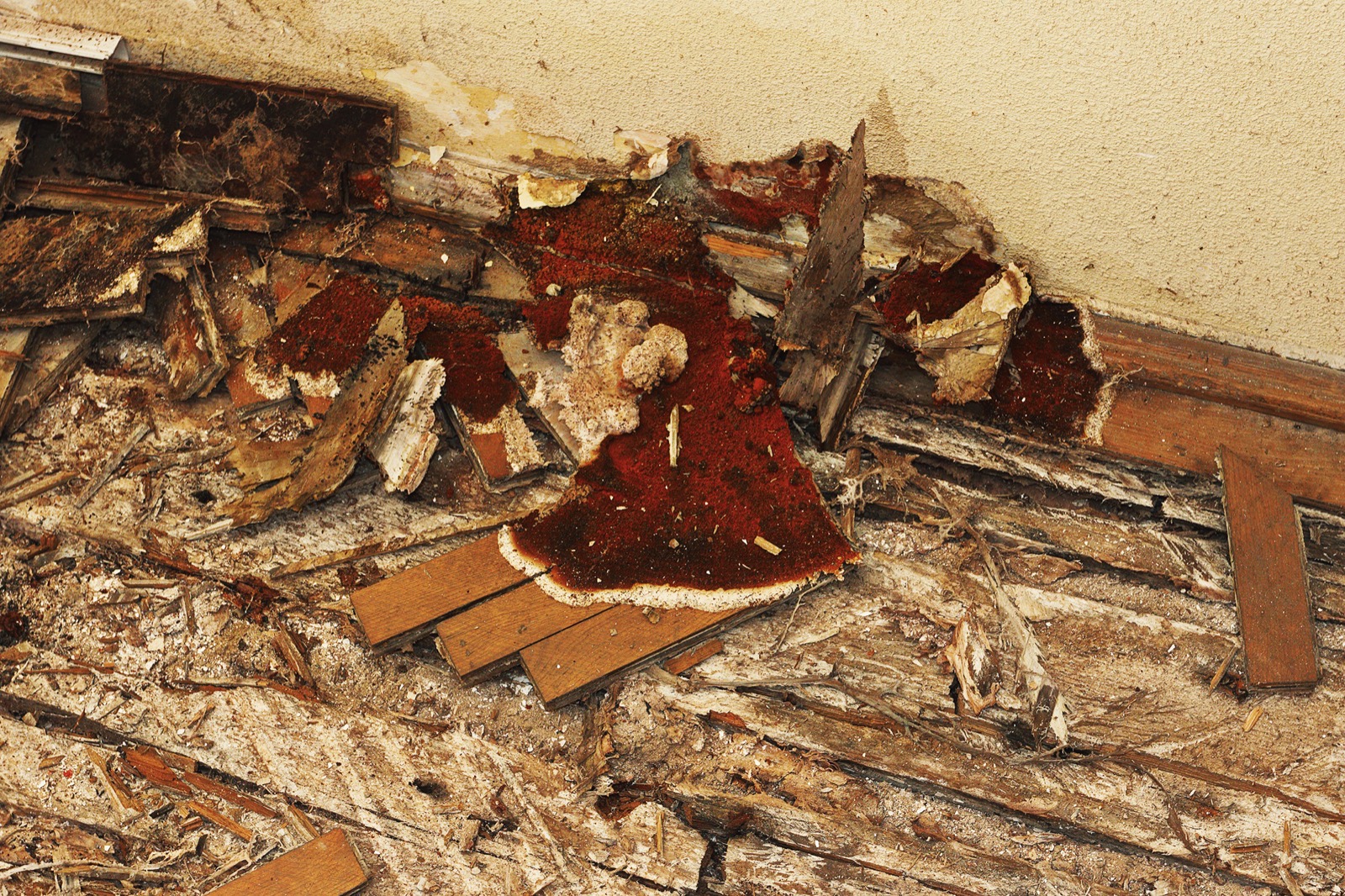
Soft Spots, Rot, and What Has to Be Fixed Before New Floors Go Down
Softness under your feet near a wall. A patch that smells musty. A section of flooring that creaks in the same spot no matter how many coats of finish it gets. These are signs that the subfloor is failing, and covering them up with new hardwood is the fastest way to guarantee the new floor will fail too.
Most homeowners don't think about the subfloor. They see the top layer—hardwood or carpet or tile—and assume the structure underneath is sound. But hardwood installation is only as good as what sits beneath it. A soft or rotted subfloor will move, squeak, and shift under the weight of foot traffic. The new hardwood will follow, creating gaps, lippage, and eventual failure.
Before any hardwood goes down, the subfloor must be structurally sound, dry, and flat. Getting it there sometimes requires significant repairs.
Why subfloor failures matter
A stable subfloor is the foundation for a quiet, flat, long-lasting hardwood installation. Hardwood is a natural material that moves with humidity and temperature, but that movement has to be small and controlled. A weak subfloor amplifies every deflection, every shift in moisture, and every footstep.
Squeaks develop when subflooring separates from joists or when panels rub against fasteners. Lippage occurs when the surface isn't flat. Gaps and cupping accelerate when moisture wicks up through a compromised subfloor. And if the subfloor is actively rotting, the new hardwood can fail in months.
The professional approach is to inspect the subfloor before work begins, identify problems, repair them, and verify the repairs before installation starts.
Signs of subfloor damage homeowners can spot
Softness or sponginess underfoot in localized areas usually means rot in plywood or OSB. Press the floor with your hand or foot; if it gives and doesn't spring back, you likely have moisture damage.
A persistent musty smell near floor level, especially in basements or crawlspaces, points to moisture accumulation or mold growth. This is particularly common in Douglas County homes where crawlspace dampness is the norm.
Visible sloping or sagging in the floor plane, where one room slopes toward the center or a long hallway dips, usually indicates compromised joists or inadequate support.
Localized squeaks that return after fastening or shimming often mean the subfloor itself is deteriorating, not just loose.
Discoloration or staining on subfloor panels visible in crawlspaces, or dark, soft patches you can see or touch, are signs of termite damage or rot that require immediate attention.
What the inspection should cover
Before installation, a qualified installer should take moisture readings in the subfloor and the surrounding air. The standard is between 6 percent and 9 percent moisture content in the subfloor, and readings should be taken in multiple locations.
Flatness should be checked with a straightedge across the entire subfloor. Most hardwood manufacturers require the subfloor to be flat within 1/8 inch in 10 feet. Wide-plank products often demand stricter tolerances, sometimes 3/16 inch in 10 feet.
A crawlspace should be inspected from below when possible. This means checking joist condition for rot or insect damage, looking for standing water or excessive moisture, and verifying that plumbing leaks aren't creating new problems.
The installer should document the condition of the crawlspace or basement and confirm whether a vapor barrier is present and intact. In many Roseburg homes, crawlspace vapor barriers are missing or deteriorated, and this needs to be addressed.
Common repair scopes before hardwood installation
Replacing damaged subfloor panels is the most straightforward repair. Rotted plywood or OSB is removed and replaced with new material of the same thickness and grade. The new panels must be properly fastened to joists, and seams should be taped or supported to prevent future telegraphing through the hardwood.
Sistering joists—bolting new lumber alongside damaged or undersized joists—adds structural rigidity and reduces bounce. This is common in homes with wide spans, older framing, or concentrated damage in one area.
Blocking and bracing add perpendicular support between joists to reduce deflection and squeak. It's labor-intensive but essential for wide planks or long open rooms.
Re-fastening loose subfloor sheets uses screws or ring-shank nails to pull gaps tight. Sometimes the original installation was done with inadequate fastening; re-securing the panels often eliminates squeaks and improves overall stability.
Addressing moisture sources comes before any physical repair makes sense. A contractor should confirm that gutters are clear, downspouts drain away from the foundation, grading slopes away from the house, and crawlspace ventilation is working. If a plumbing leak is causing the problem, it needs to be fixed first.
If the crawlspace lacks a vapor barrier or the existing barrier is compromised, a new one should be installed before the hardwood arrives. This slows moisture migration from soil and improves long-term stability.
Getting repair costs and scope in writing
A reputable contractor will provide a written estimate that separates the subfloor repairs from the hardwood installation. The repair scope should list which panels will be replaced, how joists will be reinforced, whether sistering or blocking is included, and what moisture control measures will be taken.
Ask whether the contractor performs repairs in-house or coordinates with a separate carpenter. Either approach is fine, but the responsibility and timeline should be clear.
Request that moisture readings and a flatness plan be documented before installation begins. A written report showing subfloor moisture content, ambient humidity, and a schedule for acclimation builds confidence and protects the investment.
The estimate should also specify what thickness and grade of replacement subflooring will be used. Standard 3/4-inch CDX plywood is common, but some installations benefit from thicker material or staggered seams for extra stiffness.
Prevention comes before installation
Getting ahead of subfloor problems is much cheaper than fixing the hardwood after it has failed. A thorough pre-installation assessment that includes moisture testing, flatness verification, and crawlspace inspection is the foundation of a good installation.
If you're planning hardwood floors in Roseburg or Douglas County and want to know what repairs are needed before the new floor goes down, give Back to the Wood Floors a call for an on-site evaluation. We'll test the subfloor, identify what needs to be fixed, and provide a clear scope and timeline so the installation succeeds from day one.
Ready to transform your floors? Back to the Wood Floors has been serving Douglas County since 1990.
Get a Free Quote See Our Work