
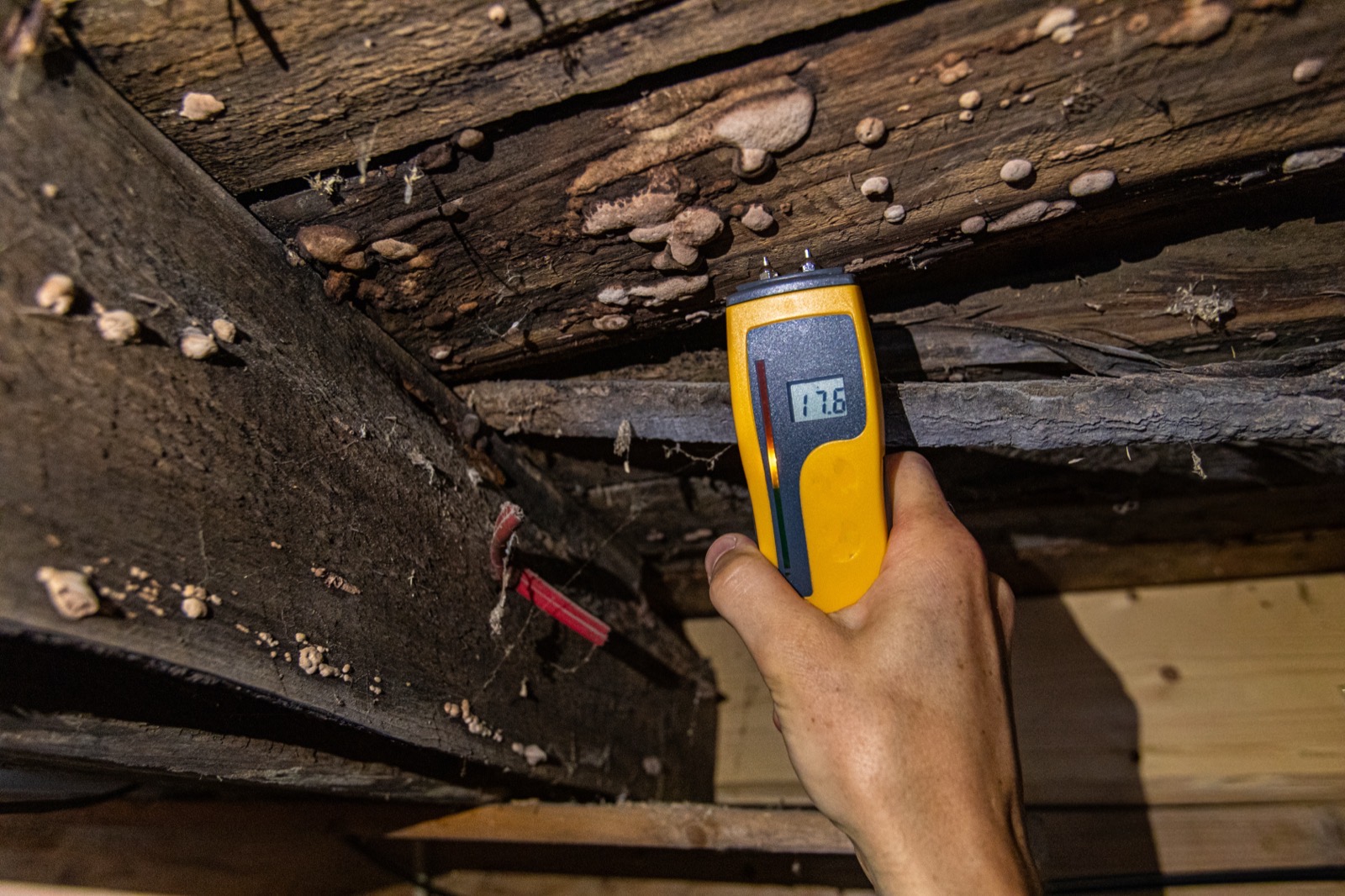
That Damp Crawlspace Is Ruining Your Floors
A wet or humid crawlspace is one of the most common sources of hardwood floor problems in Roseburg. The crawlspace air carries moisture upward into the subfloor and the underside of hardwood boards. That moisture makes the bottom of the wood swell while the top dries normally, creating cupping, crowning, seasonal gaps, and squeaking. Many homeowners don't connect their floor problems to what's happening in the crawlspace until it's too late.
The crawlspace is part of your home's environment, even though you don't live in it. If the soil down there is wet or the air is humid, it's affecting your hardwood. Fixing crawlspace moisture often prevents or solves floor problems more effectively than any floor repair alone.
How crawlspace moisture reaches the hardwood
Moisture moves upward through the building assembly: soil moisture rises into the crawlspace, crawlspace humidity rises into the rim joist and subfloor, and eventually into the hardwood above. It's a vapor-driven process that happens even when there's no standing water.
In the Umpqua Valley, groundwater tables are often high, especially in winter and spring. Rain sits in the soil. Downspouts discharge near foundations instead of away from them. Poor site grading slopes toward the house. All of that keeps the soil saturated and pushes water vapor upward.
The crawlspace itself may have no ground vapor barrier, allowing moisture from the soil to evaporate directly into the crawlspace air. A relative humidity reading in a damp crawlspace might be 75-85%, while the living space above is 45%. That humidity difference creates a constant upward vapor drive.
Wet insulation, sagging fiberglass, and damp framing are signs that the moisture has been present for a long time. By the time you see wet insulation, the subfloor and the bottom of your hardwood may already be compromised.
Signs that your crawlspace is the problem
Check your crawlspace. Look for standing water, damp soil with no drainage, sagging or wet insulation hanging from the floor joists, condensation on ducts or plumbing, or musty odor at the access hatch.
If your hardwood is cupping or showing seasonal movement more in certain rooms than others, look at which rooms sit over the crawlspace. Cupping is often worse over the wettest part of the crawlspace or near the exterior walls where soil is coldest and moisture condenses most.
If gaps appear in winter and close up in spring or if the floor squeaks in humid months, crawlspace humidity is a likely cause. The wood is swelling and shrinking with seasonal moisture changes driven from below.
Use a hygrometer in your crawlspace for a week. Measure the relative humidity. Compare it to the living space humidity. If the crawlspace is 15-20% higher, you have a humidity problem that's driving moisture upward.
How to fix it
Drainage comes first. Check exterior grading around the foundation. Does soil slope away from the house? Are gutters and downspouts discharging properly, away from the foundation? Are there any low spots where water pools after rain?
Poor drainage must be fixed before you worry about the crawlspace. If water is being pushed at the foundation, interior fixes alone won't work.
Install a ground vapor barrier if the crawlspace doesn't have one. Lay a heavy-duty polyethylene or reinforced sheeting directly on the soil, overlapping seams by 12 inches or more and extending it up the rim joist. This stops soil moisture vapor from entering the crawlspace air. The cost is modest and the benefit is immediate.
Improve ventilation or seal and condition the crawlspace depending on the conditions. Some crawlspaces benefit from open venting to the outside (which works in summer but doesn't help in winter). Others need closed, conditioned crawlspaces with a small dehumidifier and sealed vents to maintain stable humidity year-round.
Check for and repair any plumbing leaks, standing water, or sump-pump discharge going into the crawlspace instead of away from the house.
Planning a floor installation in a moisture-prone crawlspace
If you're planning new hardwood and your home has a damp crawlspace, address the crawlspace before ordering flooring.
We test your subfloor and crawlspace conditions before installation. We measure subfloor moisture content and crawlspace relative humidity. If the subfloor is reading 9-10% MC and the crawlspace is 75% RH, we know the moisture environment and can plan for it.
If the crawlspace needs work, we recommend those improvements first. We may recommend engineered hardwood over solid because it's more stable in variable humidity. We may recommend a specific underlayment or adhesive rated for moisture resistance.
We won't install hardwood over a problem crawlspace without a plan. Cramming a floor installation over wet subfloors just creates a repair job six months later.
Why it's cheaper to fix the source
A damp crawlspace costs hundreds or low thousands to fix properly: ground vapor barrier, improved drainage, maybe a dehumidifier. Replacing a cupped or buckled hardwood floor costs tens of thousands.
If you can see hardwood cupping or movement problems, the crawlspace is usually the culprit. If the crawlspace is still wet or humid, fixing the floor alone will fail. You have to fix the moisture source, not just the visible symptom.
After crawlspace work is done and conditions stabilize, subfloor moisture readings drop. New hardwood installed in that controlled environment is stable and moves less seasonally.
Getting started
If you're noticing floor problems and you have a crawlspace, start with a moisture check. Look under the house. Use a hygrometer. Take photos of any wetness, mold, or poor insulation condition. That information helps us understand your situation.
Schedule Back to the Wood Floors for a pre-installation moisture and crawlspace assessment. We'll evaluate the source of the moisture, recommend exterior and crawlspace work if needed, and plan a hardwood installation that matches your home's real conditions.
A wet crawlspace under a new hardwood floor is a setup for failure. A dry, conditioned crawlspace under a properly installed floor is a setup for stability and longevity. Let's start with the crawlspace, then your floors will follow. Contact us for an assessment.
Ready to transform your floors? Back to the Wood Floors has been serving Douglas County since 1990.
Get a Free Quote See Our Work