
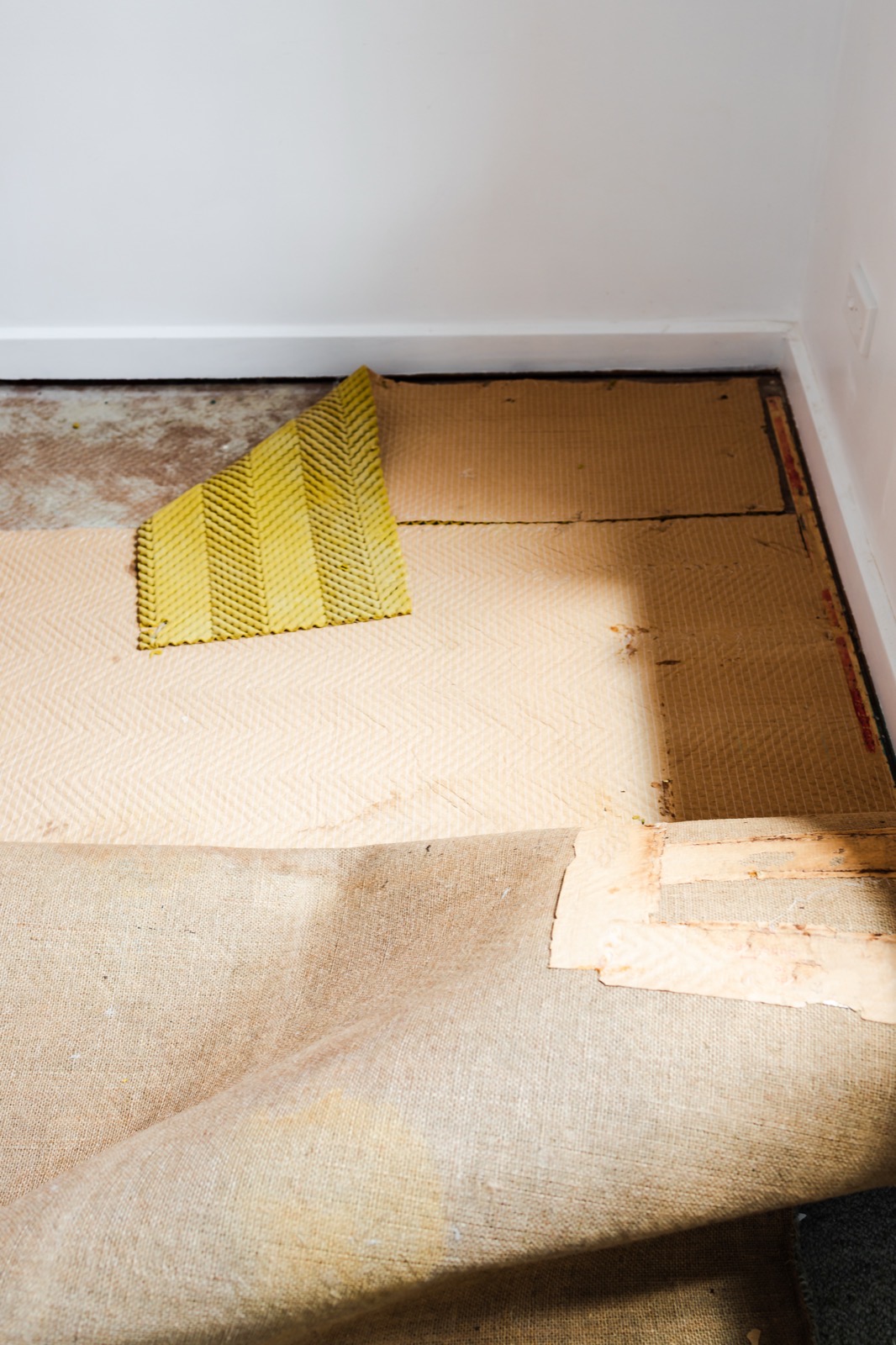
There Might Be Hardwood Under That Carpet
Sometimes you find beautiful hardwood under that carpet. Sometimes you find patched areas, pet stains, adhesive residue, and non-hardwood flooring. The reveal is a discovery process, not a guarantee.
Many older homes in Douglas County were built with hardwood, then carpet was installed on top decades later. Pulling up that carpet is exciting. What's underneath is often a surprise.
What you'll likely see
Tack strips around the perimeter hold the carpet down. Removing them exposes the wood along the walls. Usually this edge wood is darker from dust and less weathered than the middle of the room. Shoe molding or baseboards can hide this transition.
Staples from the carpet pad are everywhere. Removing them takes time and care. You can pull them with a flat bar, but if you go too fast, you'll gouge boards that might still be worth saving.
Some hardwood underneath is beautiful. Some is mixed species. Some is only in certain rooms. Bedrooms might have hardwood while the kitchen has fir subflooring. Many older homes have a patchwork: hardwood in some areas, plywood subflooring in others, and vinyl flooring or old tile in high-traffic zones like kitchens.
Adhesive residue from carpet pad backing is common. Some of it scrapes off easily. Some is stubborn and requires solvent or careful scraping. Exposed wood with old adhesive looks dirty and stained until it's cleaned and finished.
Pet staining shows up immediately. Dark circular spots or irregular stains indicate urine has soaked into the boards. These stains are permanent. Refinishing may lighten them, but odor often remains.
Sun fading is common, especially near windows. The areas near windows are light, the areas under furniture are dark. The difference is striking when carpet comes up. Refinishing can even out the color, but it requires sanding the entire floor.
Common hidden floor problems
Black pet stains or circular dark spots: these are chemical stains from urine or mold growth. They're fiber-deep and won't fully sand out.
Paint drips or spills: if the original hardwood was installed and paint drips fell on it, the paint has hardened and stained the surface. Some scrapes off. Some is set into the finish. Refinishing can remove light paint but not heavy layers.
Seams and glue lines: if the hardwood was installed piece by piece, seams may have opened and closed as humidity changed. Glue from old installation methods sometimes discolors boards.
Loose fasteners or squeaks: old flooring often has loose nails or screws. You'll discover these when you walk on the revealed floor.
Edge damage from tack strips
Tack strips were nailed down with aggressive fasteners. Pulling them up leaves rows of nail holes, splintered edges, and damaged board tongues along the perimeter. Professional installers can weave boards to repair minor damage, but severe breakage or missing tongues may require board replacement along the wall.
Matching old species and width can be the hardest part of restoration. If the revealed floor is 2.25-inch oak, you can find matching oak. If it's an uncommon species or a non-standard width, new boards might not match perfectly.
Baseboards and shoe molding can hide minor edge defects. Heavy damage can't be hidden without looking intentional.
Height and transition surprises
When carpet comes up, the floor level changes. Carpet plus pad adds 1.5 to 2 inches. If you're planning to restore the revealed hardwood and leave it, transitions to tile, exterior doors, and hallways will be lower than they should be. Water will run toward the lower hardwood surface instead of away from it.
Measure the carpet and pad thickness, then measure the original hardwood. Plan transitions. If the revealed floor is too low, you have options:
- Refinish the revealed hardwood and install a threshold at doorways to step down gracefully
- Install new engineered hardwood over the revealed floor with a thin underlayment to bring the height up
- Completely replace with new hardwood and prepare the subfloor to bring the height to the right level
The decision point
If the revealed hardwood is:
- Uniform species and color
- Free of pet stains and major damage
- Thick enough to sand (ask your installer to check)
- In structurally sound condition
Then refinishing is a good option. You're restoring something that already exists.
If the revealed hardwood is:
- Mixed species
- Heavily stained
- Patched or thin from previous refinishes
- Warped or cupped
Then installing new hardwood over a properly prepared subfloor is often cleaner and more predictable. New hardwood gives you consistent color, width, and finish across the entire space.
What we look for when we evaluate
When you call, tell us you're planning to pull carpet and find out what's underneath. We can schedule an evaluation after you've revealed a small section so we can see the condition, species, and thickness of the original floor.
We'll test whether the wood is salvageable or whether replacement is smarter. We'll photograph the subfloor condition and any moisture issues. We'll measure height and plan how to handle transitions.
If you decide to restore the revealed floor, we can sand it, refinish it, and repair edge damage. If you decide that new hardwood installation is better, we can install over the top with proper preparation.
Either way, the carpet-to-hardwood reveal is an opportunity to upgrade your home. If you're planning to pull carpet in the Roseburg area, give us a call and we'll help you evaluate what's underneath.
Ready to transform your floors? Back to the Wood Floors has been serving Douglas County since 1990.
Get a Free Quote See Our Work