
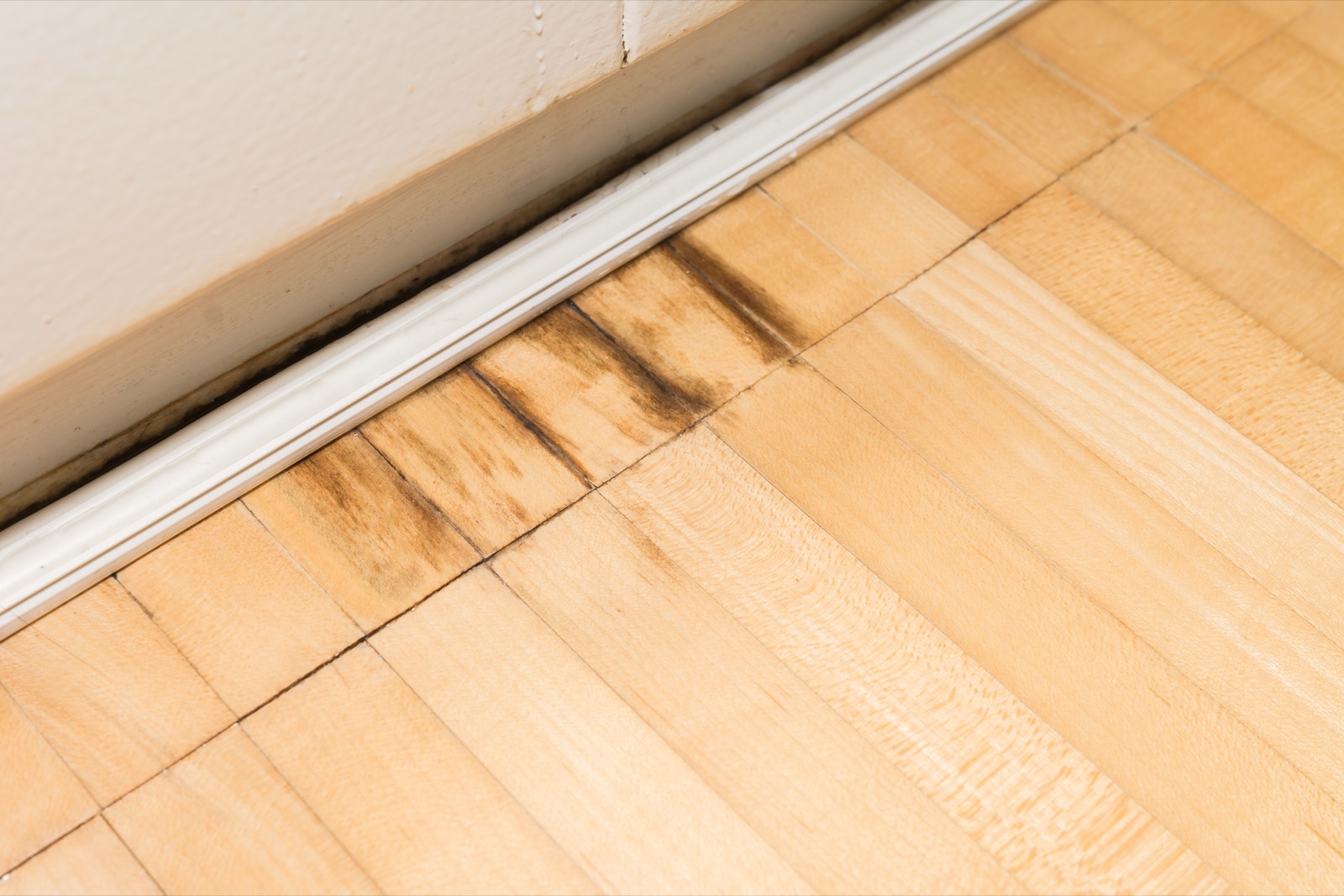
What Are Those Black Stains on My Hardwood Floor?
Black stains on hardwood are usually not just dirt. They're chemical reactions in the wood fibers, and whether refinishing can remove them depends on how deep they go.
A shallow black stain in the finish might sand out. A black stain that's deep in the wood fibers probably won't.
What causes black stains
Pet urine creates sharp-edged dark circles. Urine is acidic and chemical. It reacts with the wood itself, not just the finish. The longer urine sits, the deeper the stain. Fresh stains are lighter and shallower. Old stains are black and deep.
Water leaks create black stains that follow a pattern. They might appear as a line along a board seam, a cloud shape around a sink, or a border pattern near a doorway. These stains indicate water has been moving through the wood for some time.
Plant spills or organic materials left on the floor can cause black staining from tannin reactions. Leaves, mulch, or wet plants sitting on hardwood will stain it dark.
Metal reactions cause black stains too. Wet metal objects left on wood (nails, hardware, or furniture feet) can oxidize and stain the wood black. Iron oxide leaves a black ring.
Mold-like staining from prolonged dampness appears as irregular dark patches, often with a slightly fuzzy or soft appearance. This is different from a sharp urine stain.
Identifying the source
Location and shape tell you a lot. Circular dark spots clustered in one area are usually pet urine. A repeating pattern near a doorway or exterior wall is usually water intrusion. A stain along a board seam is usually water. A cloud of staining under a window is usually water. A dark spot under a table or plant is usually an organic spill.
Smell helps too. If the area smells sharp or ammonia-like, especially when the floor is humid, it's likely urine. If it smells musty, it's likely moisture and mold. If it has no smell, it's probably a surface stain or an old water mark.
Check whether the stain feels raised or soft. Run your fingernail across it. Does the surface feel smooth or splintery? Soft or depressed areas mean the wood fibers are compromised. Deep urine damage can soften the wood. The stain isn't just color. It's damaged fiber.
Can refinishing remove black stains?
Shallow stains in the top coat of finish will sand out completely. You'll never see them again.
Stains that have penetrated 1/16 inch into the wood will lighten with aggressive sanding, but they usually remain as a shadow. Refinishing removes a layer, but if the stain goes deeper than the removed layer, some darkness remains.
Deep stains that have soaked into the wood fibers often cannot be removed, even with heavy sanding. The chemical reaction has changed the color of the fiber itself. You can sand away the very top layer and the stain will look lighter, but when you stop sanding and finish the floor, the stain is still visible as a shadow.
Excessive sanding to remove a deep stain creates problems of its own. Sanding too aggressively removes the wear layer unevenly, creating dips and waves. The floor looks worse after aggressive sanding than it did with the stain.
Realistic refinishing outcomes
Full removal happens with shallow, surface stains. You'll see no trace of the stain after refinishing.
Partial lightening is what happens with medium-depth stains. The stain lightens but remains visible as a faint shadow or slight discoloration. Some homeowners accept this. Others are frustrated by the partial result.
Cosmetic camouflage uses darker stain colors or reactive finishes that mask the stain rather than remove it. This works well for some situations. A darker stain floor or a matte finish with character grain can make remaining discoloration blend in. You're not removing the stain. You're making it less visible.
Some refinishing companies offer sample sanding in a hidden spot to test whether the stain will sand out before committing to the whole floor. This is a smart option. You can see the results on your specific floor under your specific lighting.
When replacement is better
If the stain is paired with softness, the wood is compromised. Press gently with your heel. Does the area feel spongy or soft compared to the rest of the floor? Soft fibers mean the wood is weakened by moisture or chemical damage. Refinishing a soft floor will not restore strength.
If the stain area feels raised or crumbly or splintery, the wood damage is severe. Sanding this area will create an uneven surface. Replacement is cleaner.
Widespread staining across many boards, especially if paired with softness or odor, usually means moisture or chemical damage is extensive. Spot refinishing visible stains won't solve the underlying problem. If the entire room is stained, replacement is often more cost-effective and reliable.
Persistent odor when humidity is high is a sign that the stain is deep and the damage is fiber-level. Refinishing may lighten the stain, but odor won't disappear. Replacing those boards eliminates the source.
Repeated staining in the same area means the source is ongoing. If urine stains return to the same spot after refinishing, the pattern will repeat. Similarly, if water stains return to the same spot, moisture is still reaching that area. Fix the source before refinishing, or the stain will come back.
Health and home livability
Active leaks or dampness must be fixed before any refinishing work. Moisture in the subfloor or walls will create new staining and mold growth. Seal in dampness with a new finish and you're trapping moisture underneath, creating a health risk.
Treat mold-like staining as urgent. If the black stain has a fuzzy or soft appearance, mold growth may be present. Growing mold is a health issue. Don't refinish over it. Remove affected materials and address the moisture source.
If odor is strong and persistent, the damage is significant. Seal in odor with a new finish and you'll trap it for years. Replace the affected boards and you eliminate the source.
Next steps
Document the stain location, size, and whether it feels soft. Take clear photos in bright light. Check whether the area has an odor when humid. Note the pattern and location. Does it repeat?
Call for an evaluation. Your installer can test a small area with sanding to show you the likely outcome. You'll see whether the stain lightens sufficiently or whether it will remain visible. This information helps you decide whether refinishing makes sense or whether board replacement is better.
If replacement is recommended, ask whether it will be a few boards in that spot or a full room. A full room replacement paired with proper moisture control prevents the stain from returning.
If you have black stains on your hardwood floors in Roseburg and you're trying to decide whether to refinish or replace, we can evaluate the depth and likely outcomes. Call us for an assessment. We'll give you honest answers about what refinishing will and won't fix.
Ready to transform your floors? Back to the Wood Floors has been serving Douglas County since 1990.
Get a Free Quote See Our Work