
What Causes Hardwood Floor Cupping?
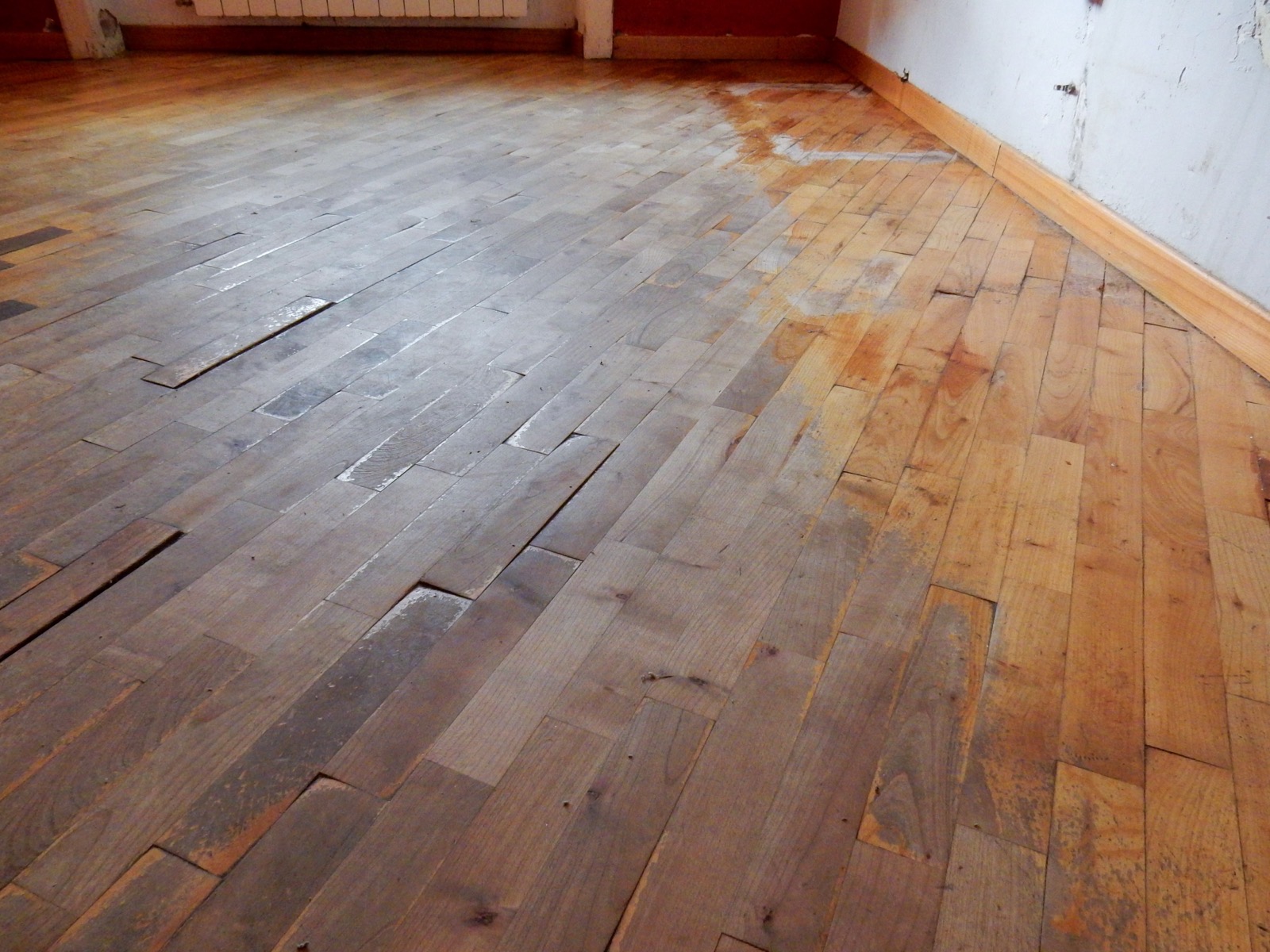
If the edges of your hardwood boards are higher than the centers, that's cupping. Run a straightedge across a few planks and you'll see it clearly: each board dips in the middle like a shallow trough. It's one of the most common hardwood floor problems in Oregon, and it almost always traces back to moisture coming from below.
Cupping happens when the bottom of the board absorbs more moisture than the top. The underside swells, pushing the edges upward. Wood expands more across the grain than along its length, so even a small moisture imbalance shows up as a visible curve across the face of the plank.
Where the moisture is coming from
In Douglas County homes, the usual suspects are damp crawlspaces, concrete slabs without proper vapor control, and plumbing leaks that go unnoticed for weeks. Oregon's wet season pushes groundwater up, raises crawlspace humidity, and saturates the soil under slabs. All of that moisture migrates upward into the subfloor and into the bottom of the hardwood.
Newer, tighter homes aren't immune either. A well-sealed house with poor ventilation can trap interior humidity from cooking, showers, and even breathing. If the HVAC isn't cycling enough or the crawlspace vents are blocked, moisture has nowhere to go but into the floor system.
Check for warning signs: musty smells near floor level, condensation on crawlspace ducts or vents, or standing water under the house after rain. Any of those point to a moisture source that needs to be addressed before the floor will flatten out.
Cupping vs. crowning vs. normal wear
Cupping and crowning are opposites. Cupping is the dish shape, edges up. Crowning is a hump shape, center up. Crowning sometimes happens after a cupped floor is sanded too early, before the moisture has equalized. The sanding removes the high edges, and when the boards eventually dry and flatten, the centers end up higher than the edges.
Normal wood texture can also fool you. Some species and cuts have natural grain variation that feels slightly uneven underfoot. The straightedge test is the simplest way to confirm whether you're dealing with cupping or just the character of the wood.
If you're seeing cupping, note when it started. Did it appear after a heavy rain, a plumbing repair, a change in HVAC settings, or a long stretch of wet weather? That timeline helps narrow down the moisture source.
What to do right now if your floors are cupping
Stop wet-mopping. Switch to a dry or barely damp cleaning method until the issue is resolved. Excess water on the surface makes the imbalance worse.
If you have a crawlspace, open it up and look. Check for standing water, wet insulation, or condensation. If the crawlspace is damp, run a dehumidifier and improve airflow while you figure out the root cause.
Check around dishwashers, refrigerator water lines, toilets, and sink supply lines. Slow leaks at plumbing connections are a common cause of localized cupping that appears in one area of the floor.
Don't sand the floor yet. Sanding a cupped floor before the moisture source is fixed and the boards have had time to equalize leads to crowning later. Fix the source, let the wood stabilize, then assess whether sanding is needed.
How we diagnose cupping
We start with moisture readings in the hardwood itself, then the subfloor, then the ambient air. We take readings in multiple locations, including near exterior walls, bathrooms, and kitchen plumbing. Comparing those numbers tells us where the moisture gradient is and how severe the imbalance is.
We also map the relative humidity in the home room by room. A house can read 45% RH in the living room and 65% in a back bedroom over the crawlspace. Those differences matter, and they explain why cupping often shows up in some rooms but not others.
The goal is a written moisture report that identifies the source and lays out what needs to happen before any cosmetic repair. Sanding over a moisture problem is paying twice.
Preventing cupping before installation
If you're planning new hardwood, the time to prevent cupping is before the floor goes down. Slab installations need a compatible vapor retarder system between the concrete and the wood. Crawlspaces may need a ground vapor barrier, improved ventilation, or encapsulation depending on the severity of the moisture load.
Product selection matters too. Engineered hardwood handles moisture variation better than most solid hardwood because the cross-ply construction resists the swelling that causes cupping. For homes with known crawlspace humidity or slab moisture, engineered is often the safer choice.
Acclimation, subfloor testing, and barrier selection all work together. Skip one and the others can't fully compensate.
If you're dealing with cupped floors or planning a new installation in the Roseburg area, we can run a moisture assessment and tell you what's going on before any work starts. Give Back to the Wood Floors a call.
Ready to transform your floors? Back to the Wood Floors has been serving Douglas County since 1990.
Get a Free Quote See Our Work