
What Humidity Should Your House Be at for Hardwood Floors?
For most hardwood floors, an indoor relative humidity between 35% and 55% is a practical target. More important than hitting a specific number is keeping humidity stable. Swings between 25% and 75% cause hardwood to expand and contract seasonally, creating gaps in winter and cupping in spring. Consistency is what protects the floor.
In Roseburg, winter heating can push indoor humidity below 30%, causing dramatic shrinkage and gapping. Spring and wet-season humidity can rise above 60%, pushing expansion and cupping risk. You have to manage both extremes.
Why humidity matters to hardwood
Hardwood absorbs and releases moisture to match the relative humidity of the air. When humidity is low, wood releases moisture and shrinks. When humidity is high, wood absorbs moisture and expands. The wood is responding to physics, not to how well the floor was installed.
A 30-point humidity swing (from 35% to 65%, for example) can cause a 3-inch-wide board to change width by about 0.15 inches. Across a room, that adds up to visible gaps or pressure that causes cupping and squeaking.
The key is stability, not perfection. A home that stays at 45% RH all year, even if it's not the "ideal" number, will have a more stable floor than a home that swings between 30% and 70%.
Roseburg's seasonal patterns
Winter in Douglas County brings heating and dry air. A home heated to 70 degrees without humidification can drop to 25-30% RH. That dries the hardwood aggressively, causing shrinkage and edge gaps that show between planks and around baseboards.
Spring and wet season bring outdoor humidity and crawlspace moisture that push indoor RH upward. Even with HVAC running, homes with damp crawlspaces or poor drainage can see indoor humidity stay elevated at 55-65% through the rainy months. Hardwood absorbs that moisture and expands, potentially causing cupping if the expansion pressure builds.
Fall can be transitional, with swings between cool mornings (high RH) and warm afternoons (lower RH). Daily cycles can be minor, but week-to-week changes are pronounced.
The homes most stable are those with moisture-controlled crawlspaces, proper HVAC balance, and awareness of humidity throughout the year.
How to measure and monitor
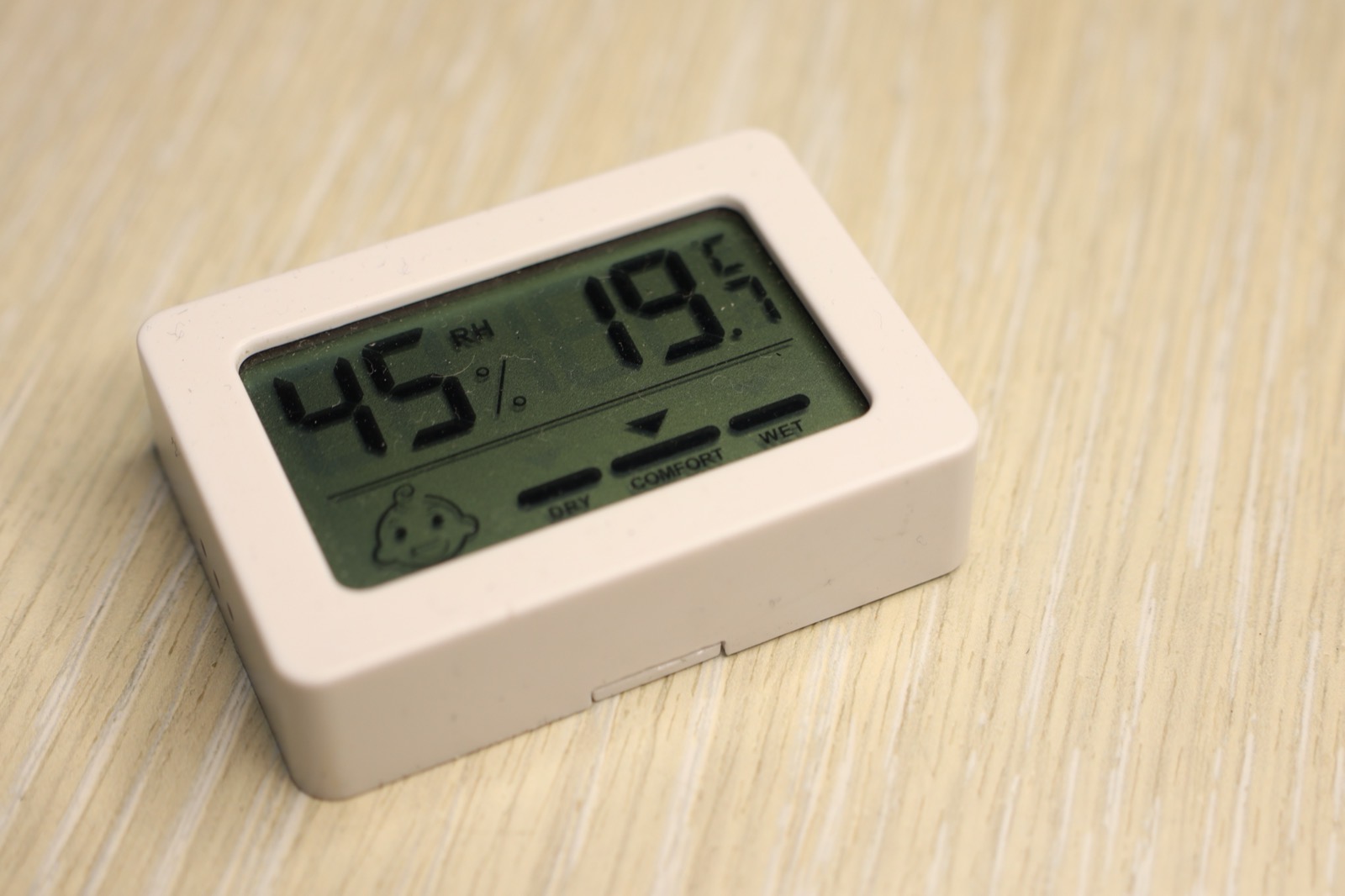
Get a digital hygrometer. They're inexpensive (under $20) and give you accurate readings of indoor RH. Don't rely on how the air "feels." Humidity perception is not reliable.
Place hygrometers in key rooms: main living area, bedroom, and any room over a crawlspace or with moisture history. Check readings weekly, especially during transitions between seasons.
Log the readings for a few months. You'll see patterns. Many Roseburg homes read around 35% in mid-January and climb to 55% by April. Others stay more moderate. Knowing your home's pattern helps you know what to expect.
Winter strategies for preventing dryness
A humidifier is the primary tool. Portable units in the main living areas or a whole-house humidifier attached to your HVAC system both work. Run the humidifier when RH drops below 35%, targeting a 40-45% range.
Keep thermostat settings steady. Constant adjustments create constant humidity swings. Set a temperature you're comfortable with and leave it there.
Ensure HVAC is balanced so heat doesn't concentrate in one room or zone. Localized heat causes localized dryness, which leads to uneven gapping.
Keep water on low during winter showers. A long, steamy shower helps humidity briefly, but if you're not capturing that moisture systematically, it's not the right strategy.
Avoid space heaters. They create localized high heat and low humidity that can cause dramatic gapping near the heater.
Wet-season strategies for managing humidity
Run bathroom and kitchen exhaust fans. Showers and cooking release steam that raises indoor humidity. Pull that moisture out of the house with ventilation.
Use a dehumidifier in the main living space if indoor RH climbs above 55% and stays there. A dehumidifier is a short-term tool, not a permanent solution. If RH stays high, the crawlspace or drainage needs fixing.
Don't open windows during rainy weather thinking it will help. Opening windows brings wet outdoor air inside and raises indoor humidity.
Address crawlspace and drainage issues that feed moisture upward. A dehumidifier manages symptoms; controlling the source is the real fix.
Humidity and product choice
Wider planks and certain species are more sensitive to humidity swings. If you live in a home where humidity is hard to control or swings a lot, engineered hardwood is often the better choice because its cross-ply core resists movement.
Solid hardwood and narrower planks are more forgiving of moderate humidity changes.
During the estimate, talk about your home's typical humidity patterns. A contractor who understands your seasonal swings can recommend the product and installation method most likely to perform well in your specific conditions.
Normal vs. problem movement
Minor seasonal gaps (under 1/8 inch between planks at the worst times) are normal and expected with hardwood. The gaps should be uniform across the room, not dramatic in one area and small in another.
If gaps open up suddenly or become wider than normal, humidity has spiked or changed rapidly. Check your hygrometer. If humidity is elevated, address the source.
If cupping or crowning appears or gets worse, indoor humidity is likely too high or a moisture source below the floor is active. Test the crawlspace or subfloor to understand the moisture gradient.
If you're seeing significant seasonal movement or distortion, you may need to monitor and adjust humidity more actively through the year. It's not the floor failing; it's the humidity environment changing and the wood responding.
The long-term plan
Buy a hygrometer and monitor your home's humidity year-round. After a year or two, you'll know when humidity typically drops and rises in your home.
Run a humidifier during low periods and a dehumidifier or ventilation during high periods. It takes a bit of attention, but the investment in humidity management protects your hardwood far better than any other single step.
If you're planning new hardwood, discuss seasonal humidity patterns with your installer. The right product and installation method for your home's humidity environment will be stable for decades.
If your crawlspace is damp or your drainage is poor, fix those before or during hardwood installation. Controlling moisture at the source prevents humidity problems from reaching the floor above.
In Roseburg, hardwood can be beautiful and stable if you understand and manage the seasonal humidity swings. Get a hygrometer, log readings through the year, and use humidification and dehumidification to keep RH moderate and stable. Your floors will thank you. If you're planning hardwood installation and want to discuss humidity management for your home, contact Back to the Wood Floors for a pre-install assessment and guidance on keeping your new floor stable through every Roseburg season.
Ready to transform your floors? Back to the Wood Floors has been serving Douglas County since 1990.
Get a Free Quote See Our Work