
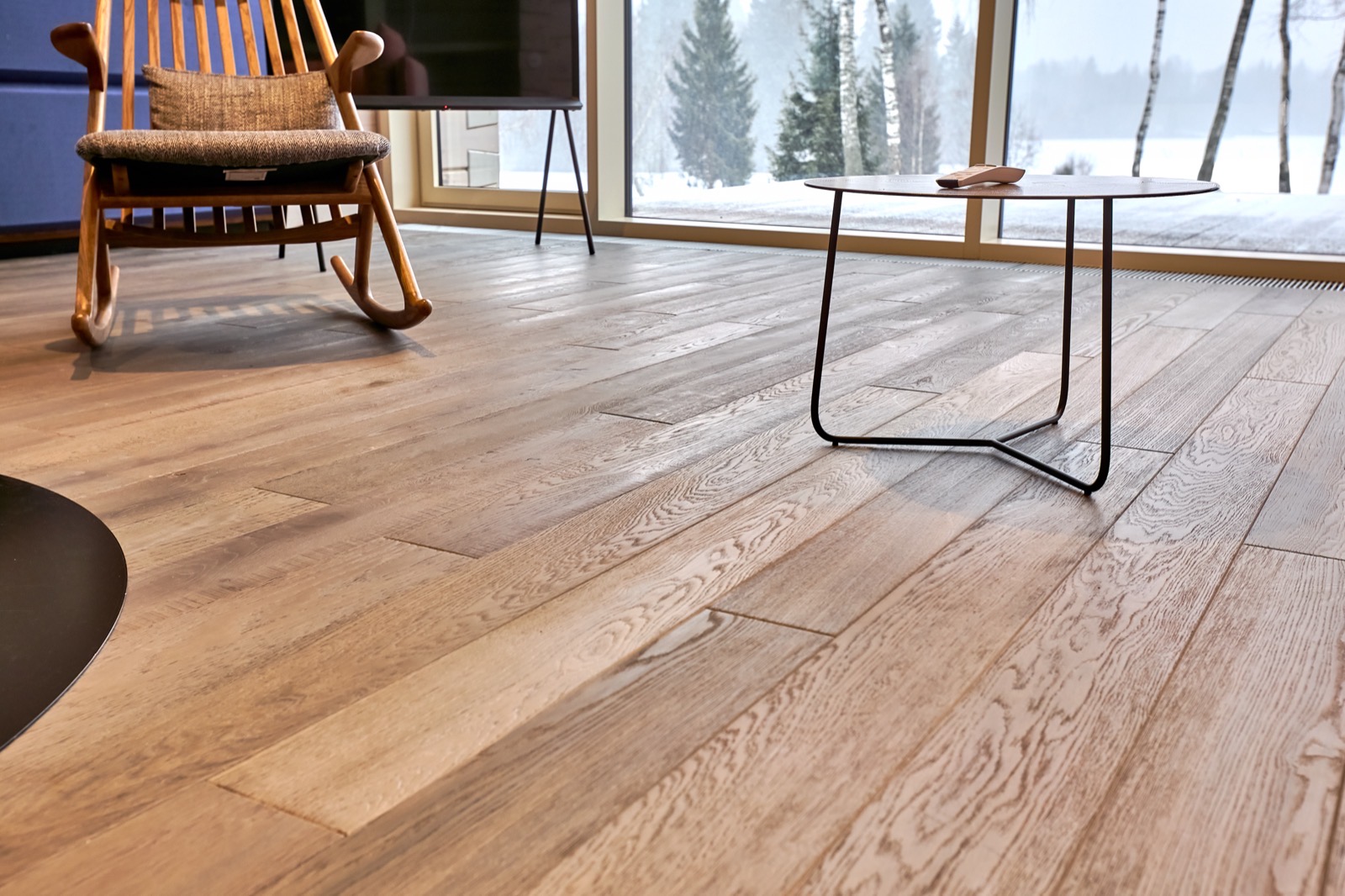
Why Do Hardwood Floors Gap Every Winter?
Every fall in Roseburg, the heat kicks on and the same thing happens in houses all over Douglas County. Thin lines open up between hardwood boards. Sometimes you can see the subfloor through them. It looks like something went wrong, but in most cases, it's wood doing what wood does when the air dries out.
Hardwood floors gap in winter because indoor heating drops the relative humidity inside your home. When the air gets dry, the boards lose moisture and shrink across the grain. That shrinkage shows up as gaps between planks. Some seasonal movement is normal, but there's a difference between a floor that moves a little and one that wasn't installed with Roseburg's winters in mind. Most of what separates the two happens before the first board goes down.
What's happening inside the wood
Wood is always adjusting to the air around it. In the flooring world, this is called equilibrium moisture content — the point where the wood stops gaining or losing moisture because it matches the conditions in the room.
In a typical Roseburg home, indoor relative humidity might sit around 45% in the fall. By January, with the furnace running, that can drop to 25-30%. That's a big swing. And when humidity drops that much, a 3-inch-wide board can shrink enough to open a visible gap along its edge.
Keeping your indoor humidity steady does more to prevent gaps than anything else.
How to tell if your gaps are normal
Not all gaps mean trouble. Uniform hairline gaps that open in winter and close back up in spring are seasonal movement. That's the wood responding to humidity changes, and it's within the range of what a well-installed floor does.
What's not normal: wide gaps concentrated near exterior walls or HVAC vents, gaps that appeared suddenly rather than gradually, or gaps that don't close up when the humid months return. Those patterns point to localized dryness, poor acclimation before installation, or a subfloor moisture problem that was missed.
If you're not sure which you're looking at, photograph the gaps month to month. Seasonal movement trends slowly. Installation problems show up fast and stay.
Why prevention starts with the subfloor
Before any hardwood goes down, the subfloor needs to be tested. We take moisture readings in multiple locations per room, not just one convenient spot in the middle. Readings near exterior walls, near bathrooms, and near crawlspace access points all matter because moisture isn't uniform across a house.
What we're looking for is a small, acceptable difference between the subfloor's moisture content and the flooring's moisture content. If that difference is too wide, the wood will spend its first year adjusting to conditions it should have been matched to before installation. That adjustment is where visible gaps, cupping, and squeaks come from.
Acclimation isn't a fixed number of days
A lot of installers follow the "let it sit for 48-72 hours" rule. That's a guess, not a measurement. Acclimation is done when the flooring's moisture content stabilizes and reads close to the home's in-service conditions, meaning the HVAC is running at normal living settings, not construction mode.
In Roseburg's wetter months, wood delivered from a warehouse may need longer to adjust, especially in homes with crawlspaces or during new construction where drywall mud and paint are still off-gassing moisture. Stacking flooring in a garage or damp crawlspace doesn't count as acclimation. The material needs to be in the rooms where it's going, with airflow, at the temperature and humidity the home will maintain day to day.
Choosing materials that handle humidity swings
Species and cut matter. Quarter-sawn and rift-sawn boards move less across their width than flat-sawn boards. For wider planks or homes where humidity swings are harder to control, engineered hardwood is often the better choice. The cross-layer construction resists expansion and contraction more than solid wood.
Layout decisions factor in too. Expansion gaps at walls and transitions between rooms give the floor space to move without buckling or creating pressure that turns into visible problems later.
What you can do right now
If your floors are already gapping every winter, start by managing your indoor humidity. Pick up a hygrometer (about $15 at any hardware store) and track where your home sits through the heating season. For hardwood floors, 35-55% relative humidity keeps most species stable. A whole-home humidifier or a portable unit in the main living areas will close those gaps up faster than you'd expect.
If you're planning new hardwood floors in the Roseburg area, we start every project with subfloor moisture testing and a site assessment before materials are ordered. That step is what keeps gaps from becoming a yearly frustration. Give Back to the Wood Floors a call and we'll walk through what your home needs.
Ready to transform your floors? Back to the Wood Floors has been serving Douglas County since 1990.
Get a Free Quote See Our Work