
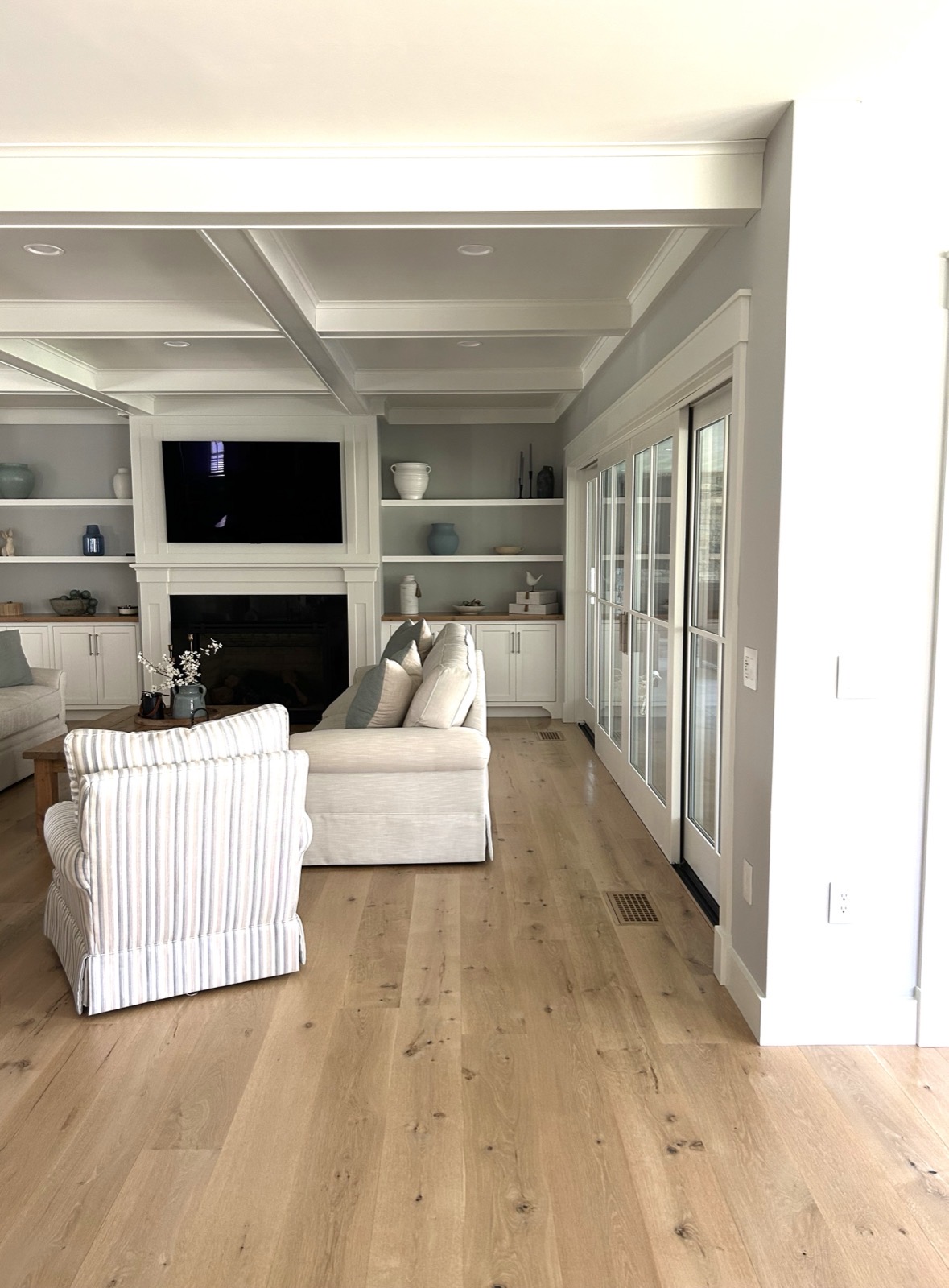
Why Does New Hardwood Look Uneven?
You inspect the new floor on installation day and notice it. One edge of a plank sits higher than the one next to it. Or the boards appear to have slight waves across a section. The installer says it's normal or will settle with time. It might. Or it might be the beginning of a problem that's easier to fix now than later.
Uneven hardwood—what's called lippage when one board edge is higher than the next—usually comes from one of three sources: the subfloor isn't flat, the wood absorbed or lost moisture between installation and now, or the installation itself wasn't done according to spec. Knowing which one is your problem helps you decide whether to live with it or demand correction.
Defining the different kinds of unevenness
Lippage is the most obvious: one plank's edge sits higher than the adjacent plank's edge. Run your finger across the seam and you'll feel a step. Use a straightedge laid perpendicular to the seams and you'll see a gap.
Overwood (sometimes called proud edges) is when the edges of individual boards stand slightly higher than the center, giving the floor a slightly ridged appearance when viewed from a low angle.
Waves are broader undulations across a section of floor, usually following subfloor seams or deflection patterns. They're more noticeable when light rakes across the floor.
Some unevenness is normal in natural hardwood. Wood texture, grain variation, and the fact that every board is slightly different can create the appearance of minor height variation. A straightedge test clarifies whether you're looking at natural variation or a real problem.
Subfloor flatness is the starting point
The most common cause of lippage is an unflat subfloor. A bump at a seam, sagging between joists, or old repairs that were never feathered properly will transfer directly to the hardwood surface.
Hardwood manufacturers specify flatness tolerances. A typical standard is 1/8 inch variation in 10 linear feet. Wide-plank products (8 inches wide and wider) often require 3/16 inch in 10 feet or tighter, because wider planks amplify small bumps.
During subfloor prep, the installer should use a straightedge to check for flatness and document what needs correction. High spots can be sanded or planed down. Low spots are filled with self-leveling underlayment or shimmed with screws or wedges.
If flatness checking was skipped, or if the prep was incomplete, lippage will show up. And once the floor is installed and fastened, fixing subfloor-related lippage usually means pulling up the boards and correcting the substrate.
Moisture and acclimation problems
When hardwood is delivered to the job site, it should be in boxes. The ambient humidity in the home should already be between 30 percent and 50 percent (or whatever range is appropriate for the specific product). The wood then acclimates—it absorbs or releases moisture until it matches the home's conditions.
If acclimation is rushed, or if it happens in conditions that are too wet or too dry compared to what the home will be during normal living, the wood will move after installation. Boards that fit perfectly in the acclimation phase can begin to shrink or swell after the homeowner adjusts the thermostat or the season changes.
Acclimation is verified with moisture readings. The wood should be tested when it arrives and again before installation. Readings should be within 2 percent of the subfloor and the ambient humidity target for the product.
Moisture testing isn't just a box-checking step; it's the difference between a stable installation and one that will move and show problems over the first few weeks.
Installation technique issues
If the subfloor is flat and the wood is properly acclimated, unevenness usually comes from how the boards were installed.
Fasteners should be driven correctly so boards are pulled down and seated fully. Screws should be tight. Nails should be driven, not just seated. If fastening was casual or incomplete, boards won't sit fully, and edges will be proud.
Adhesive (when used) should be applied consistently. Some sections of floor might be fastened only, while others get adhesive and fasteners. If glue coverage is incomplete or thin, boards won't settle evenly.
For engineered hardwood with locking systems (click or fold-down locks), the lock engagement matters. Boards that aren't fully clicked together will have gapping or height mismatch at the seam. Rolling or weighting the floor after installation helps seating, and rolling should cover the entire installation area, not just high-traffic zones.
Layout and seam stagger affect apparent unevenness. If all the seams in a row fall at the same height because of poor seam planning, small height variations become visible and obvious.
Material factors and product variation
Milling tolerance varies by product. Nominal thickness is 3/4 inch, but individual boards might range from 23/32 to 25/32 inch. If one carton was milled thicker than another, lippage can show up. Pre-finished, beveled-edge hardwood can look uneven because the bevel line is a visual reference. Wider planks amplify milling variation; a 3/8-inch difference is obvious on an 8-inch-wide plank but trivial on a 2.25-inch-wide one. If unevenness is concentrated in one carton, it might be a product variation issue the supplier should address.
What can be fixed after installation
Minor overwood sometimes resolves naturally over time. True lippage from subfloor humps rarely resolves without intervention and is risky to sand on prefinished floors. Removing and reinstalling affected sections is the most reliable but expensive fix. Lippage across the entire floor means the subfloor should have been corrected before installation, underscoring why pre-installation flatness verification is critical.
Prevention and hiring guidance
A contractor who takes installation seriously documents moisture readings, checks subfloor flatness before layout begins, corrects flatness problems, and verifies prep in writing before the hardwood arrives.
Ask whether the installer will provide moisture readings and a flatness plan as part of the estimate. If they won't or say it's unnecessary, that's a red flag.
For wide planks or prefinished floors with bevels, be especially careful. These products are less forgiving of subfloor imperfections. If your home has a marginal subfloor, communicate that early so the installer can plan appropriate correction methods.
The final walk-through should include a straightedge test of problem areas. Mark any lippage that concerns you before paying the final balance.
Unevenness is usually preventable
A hardwood floor that's perfectly flat when it's finished is the result of good planning, proper subfloor prep, correct acclimation, and careful installation technique. It doesn't happen by accident.
If you're planning hardwood floors in Roseburg or Douglas County and want to avoid lippage and unevenness, Back to the Wood Floors starts with documented moisture testing and subfloor flatness verification. We build a prep plan based on what your house actually needs, not assumptions. Call us to schedule an evaluation and get a written plan before materials arrive.
Ready to transform your floors? Back to the Wood Floors has been serving Douglas County since 1990.
Get a Free Quote See Our Work