
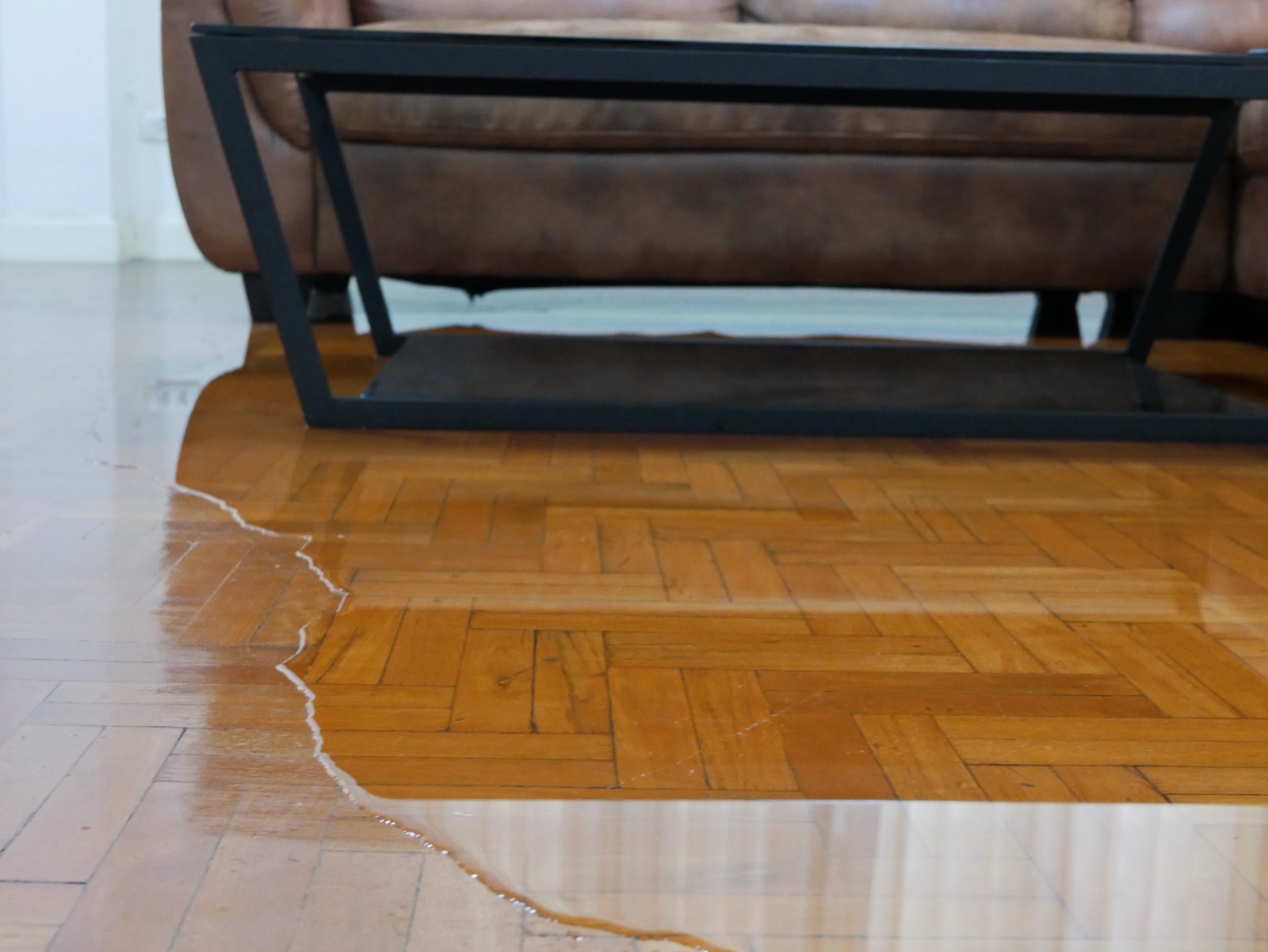
Why Is My Hardwood Floor Buckling?
Hardwood boards that lift away from the subfloor create a serious safety hazard and point to significant moisture intrusion. Buckling looks dramatic: planks stand up like tent peaks, sometimes 1/2 inch or more above the surrounding floor. If you see this happening in your Roseburg home, it means water is moving into the wood faster than it can move out, and the moisture has nowhere else to go but up.
Buckling is different from cupping, which is a dish-shaped curve. Buckling is a full separation and lift. It's an emergency signal that needs immediate attention.
What causes hardwood to buckle
Moisture enters from below and swells the bottom of the board faster than the top dries out. Wood expands most across its grain, not along its length. When the bottom of a plank absorbs water and the top is still relatively dry, pressure builds and the board bows upward and away from its fasteners.
The moisture sources are usually rapid: a burst pipe flooding a room, a wet crawlspace after heavy rain, a plumbing leak under the house that goes undetected for days, or a slab that's releasing moisture vapor because the vapor control layer failed or was never installed. In Douglas County homes, wet seasons and poor drainage around foundations push groundwater and moisture vapor upward through crawlspaces and slabs.
Inadequate expansion gaps or improper fastening can turn normal moisture expansion into visible buckling. Hardwood needs to move. If the perimeter is sealed too tight or boards are over-nailed, there's no room for the wood to expand sideways, so it lifts instead.
First 30 minutes of response
Stop people from walking on the raised area. Buckling boards create trip hazards and can crack or split if weight is put on them. Move furniture and rugs away from the affected zone.
Look for active water. Check under or near the buckled area for obvious leaks, dripping water, wet appliances, or overflow from toilets, dishwashers, or refrigerator water lines. Turn off the main water supply if you suspect a significant leak. Check the basement or crawlspace below the buckled floor for standing water or wet soil.
Improve airflow without blasting heat. Turn on HVAC fans and open windows if the weather permits. Do not run the furnace on maximum heat trying to dry the floor, because uneven heating can make buckling worse and can cause the wood to split.
Stop wet mopping or any activity that adds water to the floor. Dry the surface with towels if there's visible moisture.
What not to do
Don't nail the boards back down. This is the most common mistake. Nailing a swollen board locks it in place while moisture still exists. When the board eventually dries, it shrinks but stays fastened, leaving gaps or causing fastener popping elsewhere.
Don't cut relief slits or notches in the boards. This doesn't redistribute the moisture; it just creates visible damage and splits the wood grain.
Don't sand high spots while moisture is present. Sanding removes the material but doesn't address the moisture gradient. The floor will continue to move as drying happens, and you've just created a weak point.
Don't assume the problem will go away on its own. Ongoing moisture will delaminate boards from their finish, break down adhesives, and rot the subfloor underneath.
How we diagnose buckling
The first step is measuring moisture. We take readings in the hardwood itself, in the subfloor, and in the air. We measure in multiple locations including near exterior walls, bathrooms, and any plumbing runs. Those readings tell us the moisture gradient: how much steeper the difference is between the top and bottom of the floor system.
We also check the crawlspace or the slab directly. If it's a crawlspace, we look for standing water, wet insulation, condensation on ducts, and soil saturation. If it's a slab, we test whether the vapor control layer exists and whether the slab is still emitting moisture.
The goal is a complete picture: where the water is coming from, how much moisture is in each layer, and whether the buckled area is still actively wicking water or beginning to stabilize. That determines whether the fix is temporary drying, board replacement, or complete reinstallation.
Prevention for a new installation
If you're replacing buckling floors or installing hardwood in a moisture-prone area, the prevention plan starts before boards arrive.
Get subfloor moisture testing done. Compare the wood flooring's moisture content to the subfloor reading and the ambient humidity. If you're over a crawlspace, a ground vapor barrier and proper drainage need to be in place first. If you're over a slab, you need a documented in-slab RH test to determine whether you need a basic vapor retarder or a full moisture mitigation system.
Choose the right product for the conditions. Engineered hardwood handles moisture swings better than solid because of its cross-ply core. If your home has a history of high crawlspace humidity or slab moisture, engineered is often the better choice.
Ensure perimeter expansion gaps are correct and will stay open. Leave gaps around all edges, under transitions, and around door jambs. These gaps are not a flaw; they're essential. Make sure they're not going to be sealed off or covered after installation.
What we do next
Once we understand the moisture source and the extent of the damage, we design the replacement plan together. That includes whether the subfloor needs repair or replacement, whether the crawlspace or slab needs moisture mitigation, what product makes sense for the home's conditions, and what vapor control or underlayment system goes into the new assembly.
Buckling is usually fixable, but the faster you act, the less secondary damage occurs to the subfloor and finish. If you're seeing buckling in your Roseburg home, don't wait. Contact Back to the Wood Floors for a same-week assessment when possible. We'll test the moisture, document the problem, and provide a clear plan for repair or replacement with no guessing involved.
Ready to transform your floors? Back to the Wood Floors has been serving Douglas County since 1990.
Get a Free Quote See Our Work