
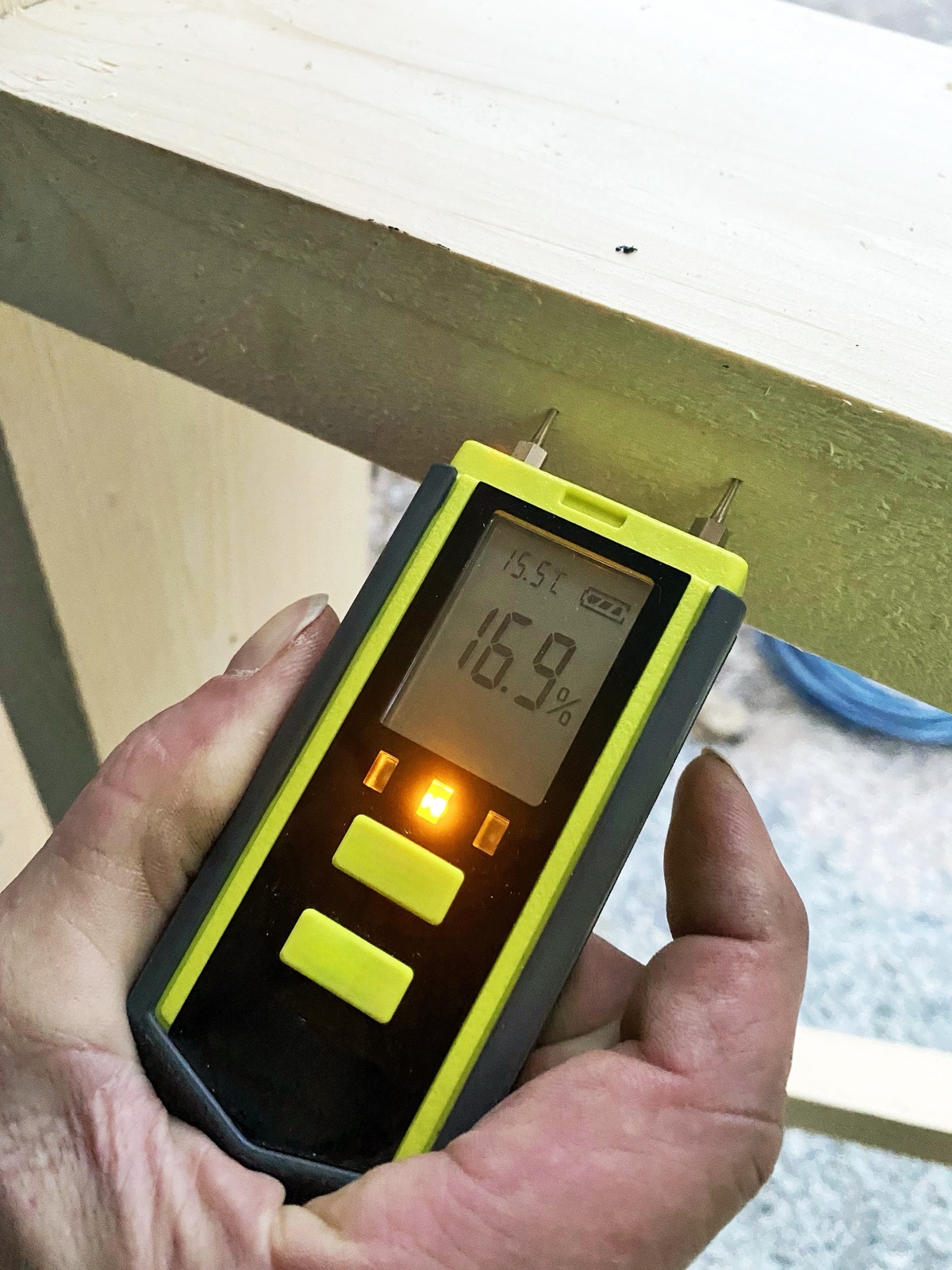
Why We Test Every Subfloor Before We Start
Most hardwood failures trace back to moisture, and the subfloor is the starting point. A beautiful floor installed over a damp subfloor will fail within months or years, no matter how good the boards are. Testing the subfloor before installation is not an optional upsell or a delay tactic. It's the decision point that determines whether your floor will last 20 years or require costly replacement.
We test every subfloor because we've learned what happens when contractors skip this step. The floors gap in winter. They cup in spring. They buckle after a wet season. Adhesives fail and planks delaminate. Homeowners end up spending 10 times more on repairs than they would have spent on proper testing and mitigation at the start.
Why subfloors behave differently
Roseburg homes sit over different subfloor types, and each one behaves differently with moisture. Plywood and OSB are engineered wood products that absorb and release moisture with the seasons. They swell in humid conditions and shrink when dry. Over a wet season in Douglas County, a plywood subfloor can jump from 8% moisture content to 15% or higher.
Concrete slabs never fully dry out. They can look dry on the surface and still emit moisture vapor from below for years, driven by ground moisture, capillary action, and hydrostatic pressure. A slab poured 10 years ago can still be a moisture source if the vapor control layer was inadequate or failed.
Engineered joists and I-joists have their own vulnerabilities. They're sensitive to moisture and sag or warp if they stay damp for extended periods.
The subfloor type determines the test method, the mitigation strategy, and sometimes the entire product choice. You can't design a moisture control plan without knowing what you're controlling for.
What passing a subfloor test means
Passing doesn't mean the subfloor is bone-dry. It means the moisture content is stable and close to what the hardwood will be when it's in-service in your home.
For wood subfloors, most hardwood manufacturers specify that the subfloor should be within 2-4% of the flooring's moisture content. If the hardwood will be at 7% MC and the subfloor is at 12% MC, the wood will absorb moisture from the subfloor and swell, creating expansion forces that the fasteners can't hold.
For concrete slabs, we measure in-slab relative humidity (RH), usually with a calcium chloride test or an electronic in-slab RH probe. The test result determines which adhesive and moisture control system you can use. Some adhesives fail if the slab is above 85% RH. Others work up to 95% RH. The test tells you where you stand.
The test results get documented. We record the date, time, location, room, instrument type, and readings. That documentation becomes part of your project record and protects the warranty. Most hardwood manufacturers require documented moisture testing before their warranty applies.
How we test and where
For wood subfloors, we use pin-type or pinless moisture meters. Pin meters push small electrodes into the wood; pinless meters read from the surface. We take multiple readings per room, including near exterior walls, over plumbing, and in any area that has had water problems. We don't cherry-pick one good reading and call it done. We average multiple readings to get a realistic picture.
For concrete slabs, we place calcium chloride test kits at several locations or use electronic in-slab RH probes. These tests measure the moisture being emitted from the slab. Surface moisture meters don't tell the real story because a slab can be dry on top and saturated below.
The HVAC system should be running at normal living conditions for at least a week before testing. If your home hasn't been lived in for a month, or if the heating or air conditioning is off, the readings won't reflect real in-service conditions. We test the home the way you'll live in it day-to-day.
We check for recent plumbing work, cleaning, or heavy rain. If the home was wet-mopped the day before, we know to retest. If there was recent work under the slab or in the crawlspace, conditions are still settling.
What happens if the test fails
If your subfloor is wetter than acceptable, we don't say "install anyway and hope for the best." We delay installation and implement mitigation.
For a wet crawlspace, we may recommend a ground vapor barrier, improved ventilation, drainage repairs, or dehumidification depending on how wet it is and what's causing the moisture. For a concrete slab, we select a vapor control product rated for the measured moisture level: a basic vapor retarder for low-RH slabs or a full mitigation system (epoxy, polyethylene sheeting, or specialty underlayment) for high-RH slabs.
We discuss timeline with you. Sometimes mitigation takes a few weeks. Sometimes it takes longer. But that delay up front is insurance against repair costs and heartbreak later. We'd rather delay a few weeks than install a floor that fails in a year.
Why this matters for warranties
Many hardwood manufacturers require documented moisture testing as a condition of the warranty. If your floor fails and there's no moisture test record, the manufacturer can deny the warranty claim. You end up responsible for the entire repair cost.
We keep your project packet with all moisture readings, mitigation documents, product data sheets, and acclimation records. If you ever need to make a warranty claim or if a future installer works on your floor, that documentation proves the floor was installed correctly and moisture was controlled.
Subfloor testing for your new floor
Before you order hardwood, schedule subfloor testing. We come out, take readings in multiple locations, compare them to your planned flooring, and give you a go or no-go. If we say go, you proceed knowing the subfloor is ready. If we say no-go, we tell you what needs to happen first.
The testing fee is small compared to the cost of replacing a failed floor. It's the best investment you can make before your hardwood installation. Contact Back to the Wood Floors to schedule a moisture readiness evaluation. We'll test your subfloor, explain the results, and tell you exactly what you need to do next.
Ready to transform your floors? Back to the Wood Floors has been serving Douglas County since 1990.
Get a Free Quote See Our Work