
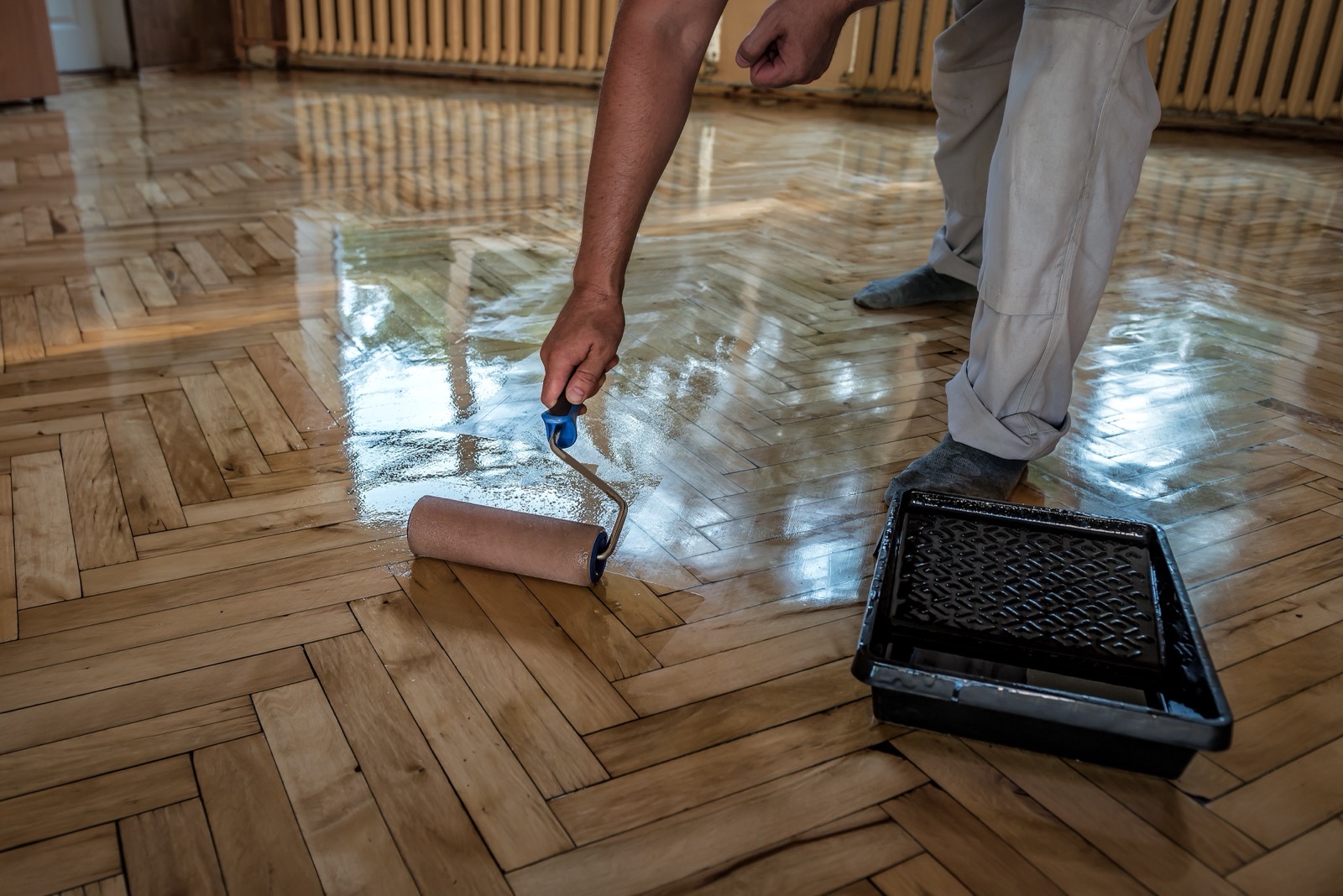
Why Your Hardwood Finish Turned Cloudy
Your finish looks hazy or has a white cloud across it. Or it stayed soft and tacky weeks after application. Or it started flaking in spots near the bathroom. These are finish failures, and they're not random. Cloudy, sticky, or peeling finishes happen when high humidity, poor surface prep, or incompatible products prevent proper curing.
Oregon's damp climate creates finishing challenges that dry climates never face. High humidity slows evaporation and can trap moisture in the finish film itself. When a finish cannot cure properly, it loses adhesion and develops defects that look like material failure.
Understanding the three common finish problems
Cloudiness or haze on the surface is called blush. It happens when moisture condenses in the finish during drying. The polyurethane is still wet, and water vapor from the air becomes trapped in the film. As the finish sets, that trapped moisture becomes visible as a cloudy or milky look. It's cosmetic at first but can become structural if the finish cannot cure past it.
Sticky or soft finish that stays tacky weeks after application means the finish never fully hardened. This usually points to humidity so high that solvents or water cannot evaporate fast enough for the film to set. It can also happen if coats went on too thick, if you missed the recoat window and applied a second coat too soon, or if incompatible products are layered.
Peeling or flaking finish means adhesion failed. The finish either didn't bond to the wood beneath it, or a later coat didn't bond to an earlier one. This happens when the surface was contaminated with dust, pet oils, or silicone before finishing, or when coats were incompatible.
How humidity and temperature affect curing
All finishes cure through evaporation, and evaporation slows dramatically when humidity is high and temperature is cool. Oregon's damp months create both conditions at once. A polyurethane that cures in 24 hours in Arizona might need 48-72 hours in Roseburg during a wet month.
Waterborne polyurethanes are especially sensitive to humidity. They cure by releasing water, and if the air is already saturated with moisture, that water has nowhere to go. The finish stays wet longer, giving moisture and contaminants more time to find their way into the film.
Oil-based finishes have longer cure windows, which sounds like an advantage, but it means they stay soft and vulnerable longer. If conditions are poor during that extended cure period, the finish never hardens completely.
Temperature below 50 degrees Fahrenheit slows curing for most products. In early spring or late fall in Douglas County, even a finished floor in a heated home can cool down at night, especially near exterior walls. If the room temperature drops mid-cure, the process slows or stalls.
Surface preparation and contamination
A cloudy or peeling finish often traces back to what was on the wood before the finish went on. Dust from sanding is the obvious culprit. Brush fine grit sanding dust across smooth wood and any finish will struggle to bond. Tack cloths remove most dust, but light air circulation helps too.
Subtle contamination is harder to catch. Silicone-based polishes can leave an invisible film. Mop residue from previous cleaners lingers. Pet oils and dander settle on the floor. All of these prevent adhesion. If you're finishing a floor that has been lived on, clean it thoroughly. Vacuum with a soft brush attachment, then wipe with a tack cloth. For stubborn residue, use a very lightly dampened cloth to wipe the entire floor, let it dry completely, then tack.
Do not use products like Mop & Glo on hardwood before finishing. Do not steam-mop. These products leave a slippery coating that finish cannot penetrate.
Recoat windows and timing
Every finish has a recoat window printed on the can. For waterborne products, this might be two to four hours. For oil-based, it might be 16-24 hours. That window is critical. If you apply a second coat too early, it can stick to the first coat but fail to fully bond, creating weak spots. If you wait too long, the first coat has hardened and might need light sanding before the second coat bonds properly.
In humid conditions, follow the longest recoat window on the label. If the can says "2-4 hours," use 4 hours in Roseburg humidity. Better to wait too long than to recoat into a failure.
Controlling the finishing environment
Keeping the space at a stable temperature and humidity is as important as the finish itself. Aim for 60-75 degrees Fahrenheit and 40-60% relative humidity during application and curing. This is easier in summer when heat naturally warms the space, but in spring and fall it requires planning.
Turn on the HVAC system before you start and keep it running throughout the cure period. Use dehumidifiers if indoor humidity is above 60%. Air movers can circulate air without pulling in outside moisture. This helps evaporation without the humidity penalty of open windows during damp weather.
Keep the finished floor away from foot traffic during cure. Many finishes are "walkable" after 24 hours but not fully hardened. Dust, dirt, and skin oils from traffic get into the soft finish. Fully cure means 7-10 days of minimal activity depending on the product and conditions.
Troubleshooting if the finish fails
If you see cloudiness or haze, first check humidity. Run a hygrometer in the room. If RH is above 65%, bring in a dehumidifier and run it for 24-48 hours while the finish continues to cure. Sometimes the haze clears as humidity drops and the finish hardens.
If the haze doesn't clear after full cure, the blush is permanent and you'll need to address it. Light screen-and-recoat is an option if adhesion is still good. This means very lightly sanding the cloudy surface with 220-grit or finer, vacuuming and tacking thoroughly, and applying a fresh coat in better humidity conditions.
If finish feels sticky after a week, humidity was too high during cure.
If finish is peeling or flaking, adhesion failed. This usually means the subfloor or surface was contaminated, or coats were incompatible. Full resand is the safest fix.
A finishing plan that works in Oregon
Before any finish is applied to new hardwood in a Douglas County home, establish site conditions first. Test indoor humidity over several days. If it's swinging wildly or running high, run a dehumidifier for a week beforehand. Check the weather forecast and schedule finishing when temperatures are stable and humidity is not climbing. Ensure the subfloor is clean and contaminant-free. Use a finishing system that is rated for the humidity conditions. Apply thin, even coats. Keep HVAC and dehumidifiers on. Give the floor time to cure fully before normal use.
If you're planning hardwood installation in Roseburg and want the finish to cure right the first time, Back to the Wood Floors can assess your home's moisture and humidity conditions, create a finishing plan tailored to Oregon weather, and manage the cure process through completion. Give us a call.
Ready to transform your floors? Back to the Wood Floors has been serving Douglas County since 1990.
Get a Free Quote See Our Work